Special Session on Disarmament and Demilitarisation International Secretariat in Brussels.
Moderator: Marie Dennis (invited)
Minutes: Paul Lansu.
11 am
Opening and Aims of the Meeting by Paul Lansu.
Defence Policies
2.1. Missile Defence System, MSD
Initiatives taken so far on MSD. Tony D’Costa;
Analysis given by friends from Central Europe and Russia. Stanislaw Latek (Poland);
Analysis given by Dave Robinson, USA (invited);
Possibility of a common strategy in North America and (Central) Europe;
Debate and Conclusions.
2.3. Article 9 of the Japanese Constitution. Update given by Sr. Filo.
2 pm.
2.2. The EU and the European Security Strategy.
Input given by Prof. Dr. Sven Biscop, Senior Research Fellow, Egmont – The Royal Institute for International Relations, Visiting Professor, College of Europe, Bruges - and member of Pax Christi Flanders.
Antipersonnel Landmines
Analysis given by N.;
Ten years Mine Ban Treaty;
Debate and Conclusions.
Arms Trade and Arms Industries
Analysis given by N.;
Arms Trade Treaty, ATT. Peter Brune (invited);
Report of the Gothenburg Process. Peter Brune;
Debate and Conclusions.
Cluster Munitions
Analysis given by Mirjam Stuyk and Tony D’Costa.
Cluster Munitions Coalition and its activities. Mirjam and Tony;
Global Day of Action to Ban Cluster Bombs. Annual Event. Role of our Network.
Small Arms and Light Weapons
Analysis given by Peter Brune and Cesar Villanueva (invited);
SLAW Projects in Africa;
Debate and Conclusions.
Weapons of Mass Destruction
3.1. Nuclear Disarmament:
Analysis given by Tony D’Costa and Dave Robinson (invited);
Debate and Conclusions.
3.2. Biological and Chemical Disarmament:
Analysis given by Ineke Malsch;
Debate and Conclusions.
Pax Christi International should highlight three concrete processes where more action is required internationally:
On Small Arms – states should immediately implement the United Nations Programme of Action, and support the development of an effective Arms Trade Treaty.
On Nuclear Arms – we need more states to support the Nuclear Weapons Convention, an idea so far backed by 125 UN Member states, but in dire need of concrete action. Nuclear weapons are futile against any of today's real security threats. The NWC would provide for the elimination of nuclear weapons in much the same way comparable treaties have banned landmines and chemical and biological weapons. True human security, and the survival of our planet, will never be guaranteed until such weapons are eliminated.
On Cluster Munitions - 80 states are participating in a new multilateral process based on the Oslo declaration calling for a ban on cluster munitions by 2008. Those who have not joined are called upon to do so, those already on board are encouraged to continue to support a cluster ban treaty that will put an effective halt to the use of these weapons and ensure assistance to, and inclusion of, affected communities and individuals.
Prossimi eventi - Aggiungi
- ott23ven18:30incontro
Incontro Mappe di Pace: narrare i territori oltre i conflitti IT.A.CÀ Milan
16 Alzaia Naviglio Pavese - Milano (MI) Serena Baldini, presidente di Vento di Terra ONG, in dialogo con Danilo De Biasio direttore della Fondazione e del Festival Diritti Umani. Nel 2026 ...
 - ott23ven20:30rassegna
Nazra 2026 - Palestine Short Film Festival
Viale Monte Kosica 91/S - Modena (MO)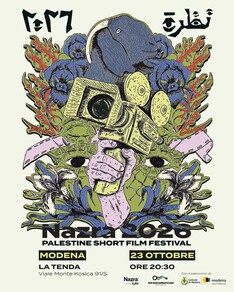 Rassegna di cortometraggi su Gaza, Cisgiordania e Libano.
 - ott24sab09:30evento
Sollèvati. La coscienza non si arruola.
Via Quintole per le Rose, 131 - Impruneta (FI)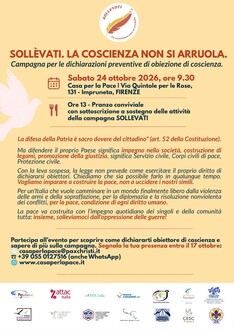 Campagna per le dichiarazioni preventive di obiezione di coscienza. Sabato 24 ottobre 2026, ore 9.30 Casa per la Pace | Via Quintole per le ...
 - ott24sab09:30evento
Agroecologia e Comunità Rigenerative
Chiostro degli Agostiniani, Via Umberto I, 5 - Bracciano (RM)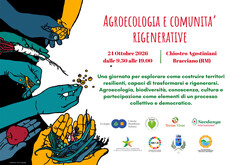 Una giornata per esplorare come costruire territori resilienti, capaci di trasformarsi e rigenerarsi. Agroecologia, biodiversità, conoscenza, ...
 - ott24sab13:00manifestazione
No al CPR, né a Castel Volturno né altrove. Il 24 ottobre manifestazione nazionale
Centro Fernandes - Castel Volturno (CE)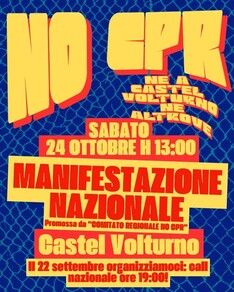 No al CPR, né a Castel Volturno, né altrove. Sì a Castel Volturno, laboratorio di umanità, diritti e giustizia sociale! ...
 - ott24sab15:00presidio
Presidio contro l'olocausto nucleare
Base militare di Ghedi - Ghedi (BS)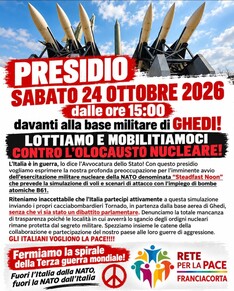 Davanti alla base militare di Ghedi! Lottiamo e mobilitiamoci contro l'olocausto nucleare! L'Italia è in guerra, lo dice l'Avvocatura ...
 - ott24sab21:00rappresentazione teatrale
La fiaba che avrei voluto raccontare ai bimbi di Gaza
Via Enrico Martinez, 11 - Messina (ME)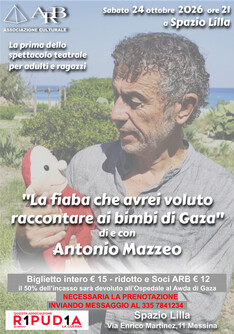 La prima dello spettacolo teatrale per adulti e ragazzi Di e con Antonio Mazzeo Biglietto intero EUR 15 - ridotto e Soci ARB EUR 12 Il 50% ...
 - ott25dom10:30dibattito
Dialogo e confronto con Gideon Levy
Via Antonio Peretti 9 (ingresso da Piazza Panini) - Modena (MO)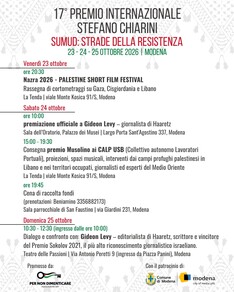 Dialogo e confronto con: Gideon Levy - editorialista di Haaretz, scrittore e vincitore del Premio Sokolov 2021, il più alto riconoscimento ...
 - ott25dom14:30conferenza
“Antonio Maresio Bazolle e i nativi americani” Conferenza
Via Valmorel 11, 32020 Limana BL - Limana BL (BL)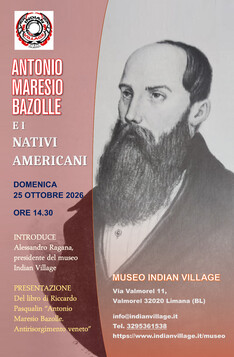 "Antonio Maresio Bazolle e i nativi americani" Conferenza Domenica 25 ottobre 2026 Ore 14.30 Museo Indian Village Introduce Alessandro ...
 - ott25dom18:00rassegna
In Sogno 2026 - 28ª Targa D'Argento Luciana Pardini
Lucca (LU)Sarà un giovane talento del pianoforte a ricevere la XXVIII edizione della Targa d'Argento "Luciana Pardini". Il riconoscimento va quest'anno a ... - ott26lun17:00evento
I luoghi della cultura, dentro e fuori gli spazi di produzione culturale: partecipazione, contraddizioni, comunità di riferimento
vico Giuseppe Maffei 4 - Napoli (NA)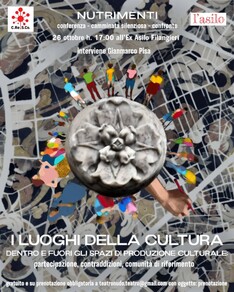 🗓 Il prossimo 26 ottobre l'Asilo, a Napoli, ospiterà #Nutrimenti, il progetto del Tavolo delle Idee di CReSCo che invita comunità, ...
 - ott27mar17:00incontro
Necropolitica migratoria
Via San Francesco di Sales 5 - Roma (RM)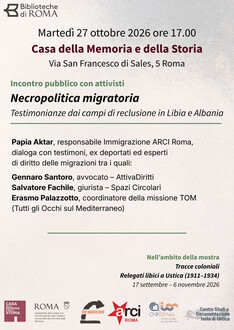 Incontro pubblico con attivisti: Necropolitica migratoria _Testimonianze dai campi di reclusione in Libia e Albania_ Con Papia Aktar, Gennaro ...
 - ott27mar21:00presentazione
Narrazioni di pace. Unica alternativa possibile
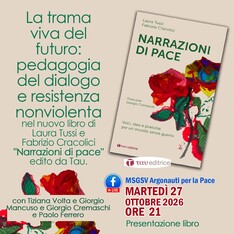 In un tempo segnato da guerre, disuguaglianze, crisi ambientali e nuove forme di militarizzazione, Narrazioni di pace raccoglie voci, idee e ...
 - ott29gio21:00assemblea
Fermiamo le guerre, costruiamo giustizia
Via Rosmini 72 - Monza (MB)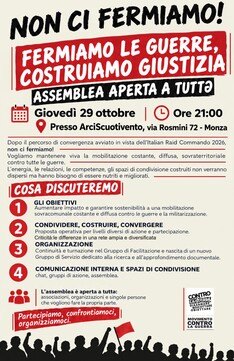 Dopo il percorso di convergenza avviato in vista dell'Italian Raid Commando 2026, non ci fermiamo! Vogliamo mantenere viva la mobilitazione costante, ...
 - ott30ven09:15convegno
Il Diritto di Uscire. Il Diritto di Tornare.
Aula Magna, Dipartimento di Giurisprudenza, Università Roma Tre - Roma (RM)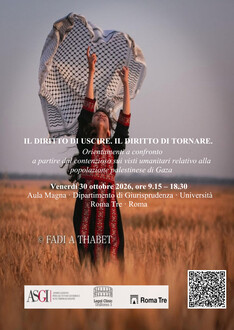 _Orientamenti a confronto a partire dal contenzioso sui visti umanitari relativo alla popolazione palestinese di Gaza_
 - ott30ven16:00convegno
Per una pace disarmata e disarmante
Villa Niscemi, Sala delle Carrozze - Palermo (PA)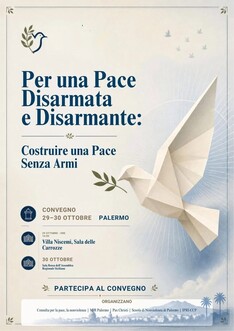 Costruire una Pace Senza Armi Interverranno: Ermete Ferraro, Alfio Nicotra, mons Giovanni Ricchiuti, Valentina Chinnici, Leoluca Orlando, ...
 - ott30ven18:30evento
Il fascino di Fantasmagorìa accende Roma
Via di Bravetta 633 - Roma (RM)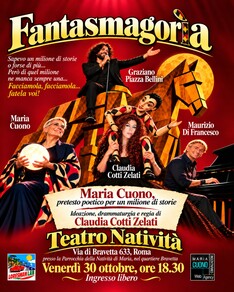 Il fascino di "Fantasmagoria" accende Roma: un viaggio teatrale da brivido tra poesia e note di pianoforte. Ci sono serate nate per lasciare il segno e ...
 - nov4mer17:30presentazione
Presentazione del libro "L’internazionale della Terra"
Lungadige Porta Vittoria, 41 - Verona (VR)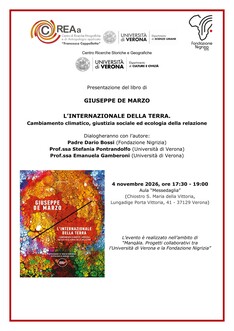 Presentazione del libro di Giuseppe De Marzo L'INTERNAZIONALE DELLA TERRA. Cambiamento climatico, giustizia sociale ed ecologia della relazione ...
 - nov6ven09:00convegno
Il Poliedro della Pace III - Europa: radici e prospettive
Centro di Spiritualità Padre Pio Via Anna Frank 8 - San Giovanni Rotondo (FG)III Edizione a San Giovanni Rotondo in collaborazione tra l'Arcidiocesi di Manfredonia - Vieste - San Giovanni Rotondo, il Comune di San Giovanni ... - nov6ven21:00evento
DOWN. Una storia di paura, una storia di coraggio, una storia d'amore
Teatro San Teodoro - Cantù (CO)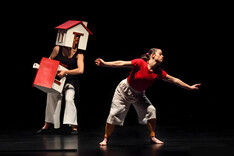 La Giornata Nazionale delle Persone con Sindrome di Down è un'occasione per riflettere sul valore del riconoscimento, dell'autonomia e del ...
 - nov7sab09:00incontro
Smile Meeting: Incontri che lasciano il segno
Vicolo de Pozzo 1 - Verona (VR)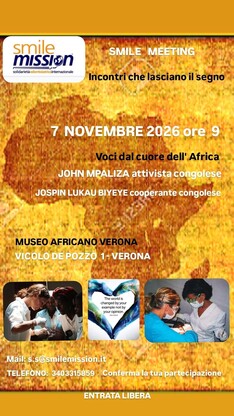 Voci dal cuore dell'Africa * John Mpaliza, attivista congolese * Jospin Lukau Biyeye, cooperante congolese Entrata libera
 - nov7sab09:00convegno
Il Poliedro della Pace III - Europa: radici e prospettive
Centro di Spiritualità Padre Pio Via Anna Frank 8 - San Giovanni Rotondo (FG)III Edizione a San Giovanni Rotondo in collaborazione tra l'Arcidiocesi di Manfredonia - Vieste - San Giovanni Rotondo, il Comune di San Giovanni ... - nov7sab17:00conferenza
1866: La vicenda delle petizioni “indipendentiste” nel Veneto
Hotel Venice, Grisignano di Zocco (VI), Via Francesco Beggiato 56 - Grisignano di Zocco (VI)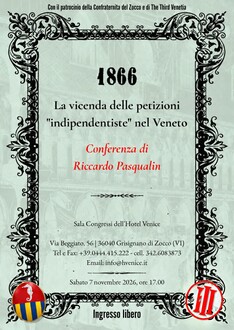 La Confraternita del Zocco è lieta di presentare l'incontro culturale _1866: La vicenda delle petizioni "indipendentiste" nel Veneto_ ...
 - nov11mer14:00corso
Dove Comincia la Pace?
9 Via Giuseppe Verdi - Torino (TO) Workshop Educazione e Politiche Cittadine per Costruire Convivenza La pace prende forma nei luoghi del quotidiano, dove differenze, bisogni e ...
 - nov28sab17:30presentazione
Narrazioni di pace con Vittorio Agnoletto
Circolo ARCI di Palazzolo Via Coti Zelati 51 (entrata da Via per la stazione) - Paderno Dugnano (MI)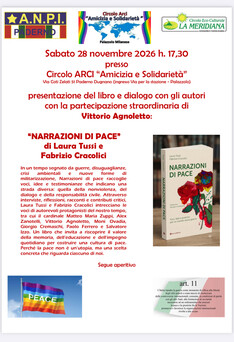 Presentazione del nuovo libro di Laura Tussi e Fabrizio Cracolici: "Narrazioni di Pace" con la partecipazione straordinaria di Vittorio Agnoletto ...
 - nov28sab21:00concerto
The Dream of a Piano
Teatro Apparte 2.0 via A. Firitano 5A 90145 - Palermo (PA)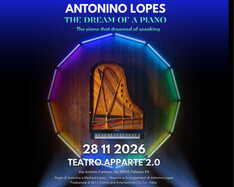 Concept dello Spettacolo: Cosa succede quando i confini della musica si dissolvono e il pianoforte diventa una porta sull'infinito? Il pianista ...
 - dic9mer08:30evento
Cosmovisioni e pratiche indigene in Brasile. La r-esistenza dei popoli nei loro territori
via San Francesco, 22 - Verona (VR)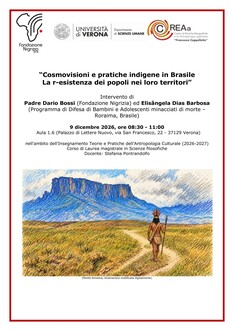 Evento in sede Intervento di Padre Dario Bossi (Fondazione Nigrizia) ed Elisângela Dias Barbosa (Programma di Difesa di Bambini e ...
 - dic17gio09:30convegno
Out Of Frame, razzismo sistemico, algoritmi e nuove narrazioni
Via del Plebiscito 102 - Roma (RM)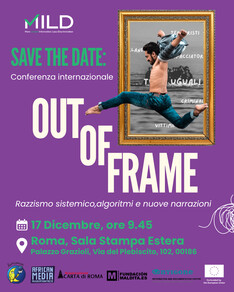 Social e intelligenza artificiale stanno cambiando radicalmente il modo di fare informazione e comunicazione, moltiplicando le voci e le fonti, che ...
 - dic31gio15:30manifestazione
59ª Marcia Nazionale per la Pace
Piazza della Costituzione - Cuneo (CN)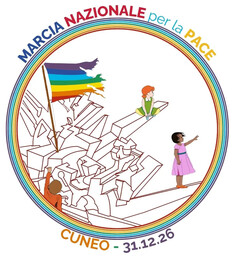 La Marcia Nazionale per la Pace è l'appuntamento che ogni anno, dal 1968, porta migliaia di persone a camminare insieme per dire no alla guerra ...