Abstract: the Baptist World Alliance (BWA) and the European Baptist Federation (EBF) remain silent in the face of the fact that Baptist conscientious objector Dmytro Koval was tortured to death and that at least 26 people died from non-combat causes in the same military unit.
Context of the events
In March 2026, Dmytro Koval, a 50-year-old Ukrainian Baptist believer and conscientious objector, was forcibly taken from recruitment offices; his request for alternative civilian service was denied and he was sent to the 425th Assault Regiment "Skelya" of the Ukrainian army. According to Forum 18, Koval died on 21 March after being tortured for refusing to eat
When the body was returned, his face was unrecognisable; his wife could only identify him "through the nose, the shape of the ears, the wrinkles on the face, and other features".
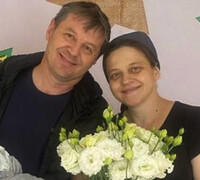
Koval, Baptist martyr in Ukraine
Author: Koval
Source: Facebook
This is not an isolated case. According to an investigation by Babel journalist Kateryna Likhohliad, only in the "Skelya" regiment, 26 people died under non-combat circumstances, many within a month of arrival. Another conscientious objector, Volodymyr Tsukanov, died from multiple rib fractures.
In a statement in July 2026, the European Bureau for Conscientious Objection (EBCO) clearly stated that over 100 conscientious objectors have been sentenced to imprisonment and thousands have been forcibly detained in military units. EBCO urged Ukraine to immediately end arbitrary detentions, torture, and mistreatment.
The silence of international Baptist institutions
The denomination to which Koval belonged — the Council of Baptist Churches of Ukraine — is part of the Baptist family. Koval's blood belongs to the Baptist faith community.
So, what have international Baptist representatives done?
Looking back at the period following the Russian invasion of Ukraine in 2022, the actions of the Baptist World Alliance (BWA) and the European Baptist Federation (EBF) were swift and active. The BWA, which represents 51 million Baptist believers in 128 countries, passed a resolution in 2022 condemning the Russian invasion, "calling for a just peace" and "committing to solidarity with Ukrainian Baptist believers". The EBF, in its 2022 council, specifically heard the testimony of Igor Bandura, Vice President of the Ukrainian Baptist Union, and passed a resolution on Ukraine. BWA and EBF, together with the Russian Baptist Union, also jointly called for an end to the war and urged "exemption from military service for Baptist conscientious objectors".
This was the correct position. This is what Baptist institutions should have done.
However, when Ukrainian conscientious objectors — Baptist believers — were forcibly conscripted by their government and tortured to death, the same BWA and EBF remained silent.
In the research results, there is no trace that BWA or EBF issued statements, expressed concern, or sent open letters regarding Koval's death. No resolution, no press release, no open letter.
A man who, for his faith, refused to kill was tortured until his face became unrecognisable. The voice of his ecclesial family at the international level has vanished.
Why this silence is serious
Some might argue: perhaps they acted privately, perhaps they are communicating through diplomatic channels.
This justification does not hold. For three reasons.
First, publicity is the prerequisite for accountability. When a Baptist believer is tortured to death, a public stance is in itself a form of protection. The United Nations, the Council of Europe, and EBCO have all publicly condemned; even the Ukrainian Ombudsman has confirmed receiving numerous complaints. If international Baptist institutions are indeed communicating privately, the results should at least be verifiable afterwards — but Koval is dead, 26 people have died. The "result" of private communication has been more deaths.<\/p>
Second, the double standard damages moral credibility. BWA and EBF quickly condemned the Russian aggression in 2022, and rightly so. But when the Ukrainian government commits atrocities that violate freedom of conscience, silence becomes unacceptable. An institution that loudly cries out when Russia violates human rights and remains silent when Ukraine does so sees its moral authority called into question. The Baptist faith tradition — from the English Baptist pioneers imprisoned for religious freedom, to American Baptist leader Martin Luther King who sacrificed himself for justice — has never been built on "treating people differently depending on the circumstances".
Third, silence sends the wrong signal. Koval's widow has asked the police to investigate for murder and torture; investigator Serhiy Popika has refused to provide information. EBCO emphasises that Ukraine has not fulfilled its commitment to pass legislation on alternative civilian service by the second quarter of 2026. Ukraine is violating the religious beliefs of a large number of conscientious objectors. In this context, the silence of international Baptist institutions objectively weakens the pressure for Ukraine to respect international human rights standards.<\/p>
Similarities with Martin Luther King
For Dmytro Koval, the script seems to repeat itself as Martin Luther King was isolated from the Baptist community when he opposed the Vietnam War.
The similarities?
Martin Luther King was a Baptist pastor (Ebenezer Baptist Church, Atlanta) and his confessional identity is central to understanding the significance of the break in 1967.
 He is a conscientious objector of Quaker faith
 Albert, international pacifist bulletin
 Albert, bulletin pacifiste international


sociale.network