The future of nuclear disarmament will be at stake at the UN on April 27th
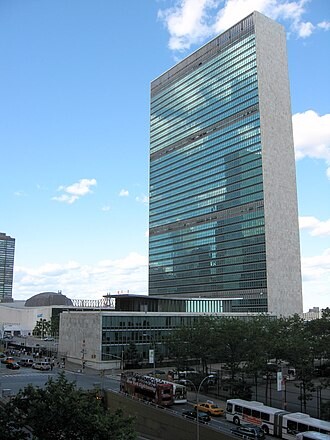
A decisive appointment
The conference was chaired by Vietnamese Ambassador Do Hung Viet. His message was clear: the nuclear disarmament agreement between the United States and Russia expired last February. "There is virtually no arms control agreement left," he said. And the Nuclear Non-Proliferation Treaty is likely the only remaining hope.
The Treaty on the Non-Proliferation of Nuclear Weapons (NPT), in force since 1970, is a cornerstone agreement based on three pillars: non-proliferation, nuclear disarmament and the peaceful uses of atomic energy .
A new failure at the UN Review Conference could trigger a crisis that would be difficult to stop, putting everyone's security at risk.
The conference will feature Hiroshima and Nagasaki survivors, the hibakusha . Their testimonies should help the world understand the humanitarian consequences of an atomic bomb.
Representatives of those Pacific Ocean populations who have suffered for years and years the consequences of open-air nuclear testing will also be present.
A Forgotten Memory: Nuclear Tests in the Pacific
Just as the Nuclear Non-Proliferation Treaty Review Conference in New York approaches, something significant has happened in the past few weeks.
On March 30, 2026 , hundreds of people gathered at the University of the South Pacific in Suva, Fiji. They remembered the victims of nuclear tests. It was Nuclear Victims Remembrance Day , a day of remembrance for those who suffered as a result of the atomic bombings. The initiative was titled ANIN jitbon mar , which in the local language means "a spiritual call from the islands."
The major newspapers and television news programs have not covered this story. For those who have a pacifist view of the world , this silence is not good. It is a sign of the removal of an inconvenient truth.
What happened in the Pacific
Between 1946 and 1996, the United States, France, and the United Kingdom detonated more than 300 nuclear bombs in the Pacific Ocean. They chose those islands because they were remote and the local populations lacked the power to communicate their pain. Their voices never reached us during those tests.
That was a Sacrifice Zone .
The most affected islands were the Marshall Islands, where the United States conducted the most destructive tests. Then came French Polynesia, where France continued to detonate bombs until 1996. Then came Kiribati and parts of Australia (British tests).
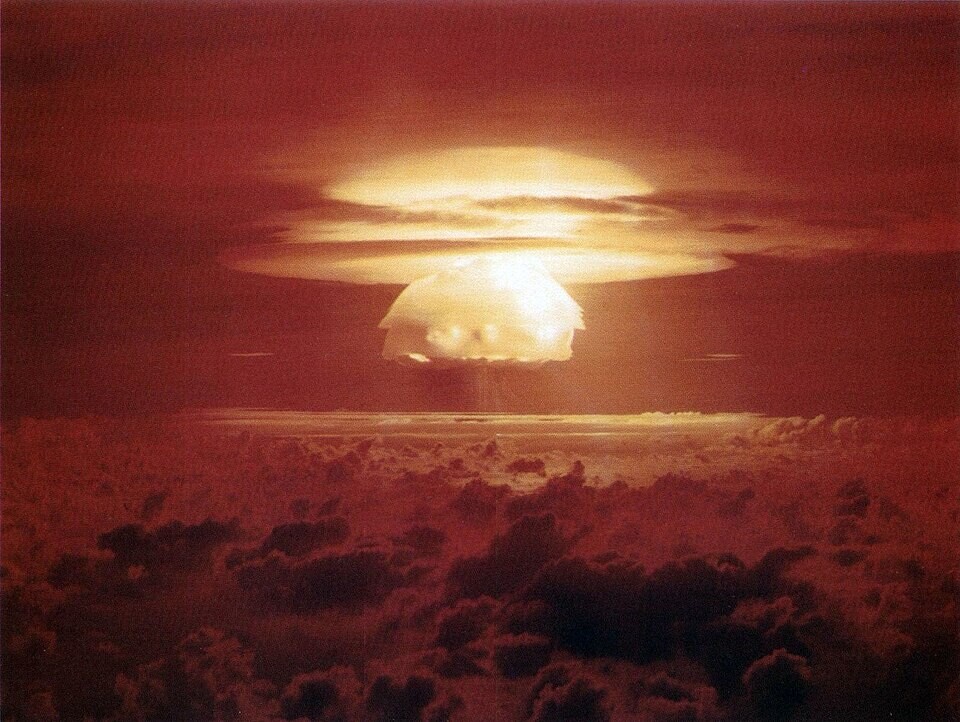
The Castle Bravo Bomb
The most disastrous test was Castle Bravo in 1954, on Bikini Atoll. The bomb was a thousand times more powerful than Hiroshima. Radioactive ash also fell on inhabited atolls like Rongelap and Utirik. People immediately fell ill: nausea, burns. Over the years, tumors developed, and children were born with deformities.
The Bikinians were relocated in 1946 with the promise that they would return. They never returned. Their island became a radiation testing ground.
The consequences still today
Thousands of people developed thyroid tumors, leukemia, and other cancers. Many women suffered miscarriages or gave birth to children with birth defects. Leaving their lands meant losing their identity and culture.
The environment has also been devastated. In the Marshall Islands, there's the Runit Dome , a concrete dome built over a crater filled with radioactive debris. The concrete is cracked, and the sea is rising due to climate change. Sooner or later, the dome will collapse.
Justice denied
Almost no one has received justice. A Marshall Islands court estimated that more than $500 million would be needed just to repair the damages to the Bikinians. The United States has never paid. France has only partially acknowledged its guilt, after decades of lies. The United Kingdom has done little or nothing.
What Pacific leaders asked for
On March 30 in Suva, representatives of the islands contaminated by nuclear tests demanded four things:
-
More support for the health of exposed populations.
-
The remediation of contaminated sites.
-
An official recognition and compensation for damages.
-
An independent control of radioactivity.
Atomic consciousness
There's one thing that risks disappearing in today's world: atomic consciousness. Keeping atomic consciousness alive means remembering, preventing, and mobilizing.
On April 27 , world public opinion must monitor what happens at the UN because the future of nuclear weapons concerns us all. Witnesses to the Pacific nuclear tests will be in New York. So will witnesses to the Holocaust in Hiroshima and Nagasaki. They will bring humanity's voice to the UN headquarters.
We at PeaceLink wanted to tell this story because the silence of the media is unacceptable .
Once again we ask ourselves: why isn't this being talked about?
Articoli correlati
 Albert, international pacifist bulletin
Ukraine: the uprising of the squares against the military "meat grinder"
The sacking of popular Defence Minister Fedorov has sparked unprecedented protests in Kyiv and other Ukrainian cities. At the heart of the anger from protesters and the families of soldiers is the strategy of Commander-in-Chief Syrskyi, accused of sacrificing too many human lives.18 July 2026 - Redazione PeaceLink- Albert, bollettino pacifista internazionale
Ucraina: la rivolta delle piazze contro il "tritacarne" militare
Il siluramento del popolare ministro della Difesa Fedorov accende proteste senza precedenti a Kiev e in altre città ucraine. Al centro della rabbia dei manifestanti e dei familiari dei soldati c'è la strategia del Comandante in Capo Syrskyi, accusato di sacrificare troppe vite umane.18 July 2026 - Redazione PeaceLink  Il caso del generale Grynkewic, Comandante Supremo della NATO in Europa
Se i generali frenano la psicosi bellica dei politici
Il ministro della Difesa tedesco, il socialdemocratico Pistorius, ha ipotizzato davanti al parlamento un attacco russo all’Europa entro il 2029. Per Macron occorre essere pronti anche a “versare il sangue”. Ma il generale che comanda la NATO europea smentisce tutti con i dati dell’intelligence.17 July 2026 - Redazione PeaceLink Albert, international pacifist bulletin
Gaza, July 2026: the crisis continues amid bombings, hunger, and impunity
As of 17 July 2026, the most reliable quantitative data indicates that the overall Palestinian death toll in the Gaza Strip exceeds 73,000 dead and 173,000 injured since the start of the war on 7 October 2023. In July, the list of journalists killed in Gaza has grown longer.17 July 2026 - PeaceLink staff


sociale.network