The Japanese government authorizes the export of lethal weapons: farewell to pacifist principles.

"With this amendment, the transfer of all defense equipment will become possible in principle," Prime Minister Takaichi said in a post on the X platform, announcing the breakthrough. "Recipients," she added, "will be limited to countries that commit to using them in accordance with the United Nations Charter."
The context: a $7 billion deal with Australia
Tokyo's change of policy comes immediately after the signing of a $7 billion agreement between Japan and Australia. The agreement calls for Mitsubishi Heavy Industries, a Japanese heavy industry giant, to build the first three of eleven warships for the Australian navy. This contract, which in itself clearly represented a push toward large-scale military exports, is now fully legitimized by law.
Previous regulations introduced in Japan in the 1970s had limited military exports to non-lethal weapons, such as those used for surveillance and minesweeping. This was a rigorous system that reflected Japan's postwar commitment to peace.
The offering at the Yasukuni Shrine
The changes announced by Takaichi were accompanied by another gesture laden with symbolic meaning. The Japanese prime minister sent a ritual offering to Tokyo's notoriously controversial Yasukuni Shrine, marking its spring festival.
Built in the 19th century to honor Japan's war dead, the shrine includes the names of over 1,000 Japanese war criminals convicted after World War II, including 14 convicted of "Class A" crimes (the most serious, involving planning and directing a war of aggression). Visits by Japanese officials to the shrine are perceived as a form of contempt for the people of China, Korea, and other nations who suffered brutality at the hands of Japanese soldiers during the war. This is not the first time the Japanese prime minister has evoked the memory of Japanese war criminals.
The turning point of the Japanese "Iron Lady"
After the defeat of the Axis powers, including the atomic bombing of Hiroshima and Nagasaki, Japan introduced a new constitution that renounced participation in the war. However, Takaichi—considered a "hawk" toward China and sometimes nicknamed Japan's "Iron Lady"—is part of a trend of recent Japanese leaders who have gradually questioned the country's pacifist stance.
The new rules
Japan will continue to formally ban arms exports to countries where there is active conflict. However, this clause will not be absolute: exemptions are provided for "special circumstances ," that is, when Japan's national security needs are taken into account (the implicit reference is to Taiwan, in the event of armed conflict with China). This vague formulation, according to experts, risks making the ban de facto circumventable at the whim of the government in power.
Who are the potential buyers?
The Chunichi newspaper , citing sources from the Japanese Ministry of Defense, revealed which countries have already expressed interest in purchasing Japanese-made weapons. These include:
-
Australia
-
New Zealand
-
Philippines
-
Indonesia (which recently signed a major defense pact with the United States)
In addition to these, at least 13 other countries will be immediately eligible for purchase under the new rules, according to Chunichi . The list—which includes at least 17 countries—could be further expanded if other states enter into bilateral agreements with Tokyo.
China's reaction
Beijing's response was swift. Chinese Foreign Ministry spokesperson Guo Jiakun stated at a press conference that "the international community, including China, will remain extremely vigilant on this issue and will firmly resist Japan's reckless new militarization." These words signal a further worsening of already tense relations between the two Asian countries.
International reactions
The international community's reaction was mixed. The United States, Tokyo's historic ally, welcomed the news, seeing Japan as an increasingly interoperable military partner. Australia, the recipient of the first major warship contract, said it was "satisfied with the regulatory clarity."
Criticism, however, came from South Korea, which was particularly concerned about Takaichi's gesture toward the Yasukuni Shrine. Europe's position was more nuanced: while Brussels called for "transparency," Berlin expressed "concern about the weakening of pacifist principles in Southeast Asia."
The home front
In Japan, the decision has divided public opinion. Polls in recent weeks indicated a slight majority opposed to the export of lethal weapons, but the ruling party forced the issue, thanks to its absolute majority in Parliament during the spring session.
Tens of thousands of people gathered on April 21 in front of theNational Diet in Tokyo , waving peace crane flags and signs reading, "Japan Will Never Sell Death Again." Among them were survivors of the 1945 bombings and young activists from the "Nihon Heiwa" (Japan for Peace) movement.
What changes for the world?
With a technologically advanced defense industry (Mitsubishi Heavy, Kawasaki, Subaru), Japan is now a top-tier weapons supplier. F-35 stealth fighters (built under license), long-range missile engines, underwater warfare systems: everything can be sold without the filter of the pacifist Constitution.
Takaichi's move is part of a broader context of Japanese rearmament: in 2024, the government had already decided to double the defense budget, bringing it to 2% of GDP; in 2025, hypersonic "anti-tank" missiles with a range of over 1,000 km had been announced.
"There is no longer any symbolic barrier," the Asahi Shimbun newspaper wrote in an editorial . "Japan has effectively become an offensive military power. The peace constitution has been hollowed out from within."
See also
- Pacifists of the world unite!
Albert, the international multilingual bulletin for peace and disarmament
Albert is a powerful reminder of Albert Einstein, who was not only the father of modern physics but also a tireless and influential advocate for nuclear disarmament. The bulletin seeks to connect the many groups around the world opposing war and rearmament.22 April 2026PeaceLink staffDear friends, activists, citizens of the world,
We are living in a crucial moment. Never since the end of the Cold War has the taboo of war been broken so easily, and the language of rearmament has once again become "normal" in government discourse, the media, and even classrooms.
 Why "Albert"?
It is in this context of grave danger to peace that Albert, the multilingual bulletin promoted by PeaceLink , was born, with an ambitious and necessary objective: to create a stable, continuous and accessible connection between the many realities in the world that oppose war and rearmament .
Not just a news program, but a connection tool . PeaceLink has been a link for peace since 1991 and is now a highly visible communication tool on the web.
Today, peace initiatives are numerous, fragmented, and often ignored by mainstream media. Albert wants to reconnect these struggles. He wants to overcome language barriers and siloed communication.
War is global, but peace groups often remain confined to local realities, failing to shape opinion on a broader, global scale.
Pacifists of the world unite!
Albert is a powerful reminder of Albert Einstein, who was not only the father of modern physics but also a tireless and influential advocate for nuclear disarmament. He worked to build a global public opinion focused on preventing conflict. He was the foundation of what was called "atomic consciousness." His warning—"I do not know with what weapons the Third World War will be fought, but the Fourth will be fought with sticks and stones"—is more relevant than ever.
What will you find in the bulletin?
In recent weeks, the world has been shaken on many fronts. Albert was created to share them all, without hierarchies, and to help everyone feel part of a single movement.
1. Japan: The Defense of Article 9
Thousands of people took to the streets in Japan to defend Article 9 of their Constitution, the "solemn rejection of war" that has been a benchmark for global pacifism for 77 years, just as Article 11 of the Italian Constitution ("Italy repudiates war"). The Japanese government wants to change it, essentially to rebuild a strong army capable of engaging China militarily. Japan is planning to export the new sixth-generation fighter-bomber (the GCAP), to be built with Italy and the United Kingdom. Albert will follow this story step by step, giving voice to the peace movements opposing this trend.
2. Germany: Youth Revolt Against Conscription
The atmosphere has changed in German schools. The government is considering reintroducing compulsory military service, and young people are not happy about it. Students are mobilizing with meetings, leafleting, and demonstrations. This is a crucial signal: the rejection of compulsory conscription becomes a political and cultural act. And a new wave of protests is expected in May, this time international and internationalist , against new military conscription plans in Europe.
3. No King Movement: From Trump to Europe
The "No King" movement was born in the United States to express opposition to Donald Trump's growing power and his authoritarian drift. Codepink's pacifism, strongly influenced by female presence and great creativity, is present in the movement. Codepink has a beautiful website . This movement has already crossed the Atlantic and is growing in Europe, particularly in Italy, where many groups identify with the rejection of a political model based on hatred, militarization, and oppression.
4. Spain: a laboratory against military bases
Spain is becoming an international reference point for those opposing the use of US military bases on its soil for bombing Iran. Spanish Prime Minister Sánchez has blocked the use of US bases for offensive purposes, calling for an end to European complicity in potential war crimes, with a clear reference to the Gaza genocide. Spain has also pushed for the EU to end its collaborative ties with Israel, responsible for war crimes. Albert will also discuss these positive developments in Europe.
5. Russia-Europe tensions
Tensions between Russia and Europe have escalated. There is a risk of further escalation. Albert will analyze these dangerous dynamics, using open data and independent military intelligence, documenting how every step forward in the military escalation in Ukraine poses an unacceptable risk to peace in Europe.
6. The split at the UN over the slave trade
An event has shocked many international observers: the United Nations General Assembly split over a resolution promoted by Ghana, historicly condemning the transatlantic slave trade. NATO and Western bloc countries did not vote in favor of the African resolution. This is a profound rift, demonstrating how fragile even shared historical memory is when geopolitical interests are at stake. Albert will also address these issues. The historical awareness of the horrors of colonialism, for which the West is guilty, cannot be forgotten. A serious reflection is needed. Even today, the guilty conscience of those who refuse to acknowledge full responsibility for the crimes committed in the past still emerges.
7. The risk of nuclear rearmament: a forgotten emergency
Finally, a crucial event: the International Review Conference of the Treaty on the Non-Proliferation of Nuclear Weapons (NPT) will open on April 27. It will do so at a dramatic moment: the New Start Treaty—the last bastion of arsenal control between the US and Russia—has expired without being replaced. Today, more than ever, the world is exposed to the threat of nuclear rearmament. Albert will follow the Conference's proceedings, giving voice to the countries of the Global South and organizations calling for nuclear disarmament.
How does Albert work?
The newsletter will be something completely new, thanks in part to generative artificial intelligence used for peacekeeping purposes. What will it be like?
- Multilingual : because peace can't be communicated in just one language. We'll start with Italian, English, French, and Spanish.
- Participation : any organization fighting against war and rearmament can send contributions, reports, and articles to info@peacelink.it
- Free and independent : no advertising, no government influence.
Because it is urgent, today more than ever
We must overcome isolation. Those demonstrating in Tokyo for Article 9, those deserting the war in Ukraine, those discussing peace in a classroom in Berlin, those opposing rearmament in Italy: they are all waging the same fight. But often they aren't communicating it to the world. We need to build a pacifist community that can communicate effectively and clearly online.
Albert was born to become visible
It was born to build bridges. To translate struggles into different languages and share them. To remember that pacifism is a daily practice of coordination and resistance.
Share Albert on your social media. Spread the word. Bring it to your assemblies, your town squares, your schools, your university classrooms.
PeaceLink – Telematics for Peace since 1991
Articoli correlati
 Albert, international pacifist bulletin
Ukraine: the uprising of the squares against the military "meat grinder"
The sacking of popular Defence Minister Fedorov has sparked unprecedented protests in Kyiv and other Ukrainian cities. At the heart of the anger from protesters and the families of soldiers is the strategy of Commander-in-Chief Syrskyi, accused of sacrificing too many human lives.18 July 2026 - Redazione PeaceLink- Albert, bollettino pacifista internazionale
Ucraina: la rivolta delle piazze contro il "tritacarne" militare
Il siluramento del popolare ministro della Difesa Fedorov accende proteste senza precedenti a Kiev e in altre città ucraine. Al centro della rabbia dei manifestanti e dei familiari dei soldati c'è la strategia del Comandante in Capo Syrskyi, accusato di sacrificare troppe vite umane.18 July 2026 - Redazione PeaceLink 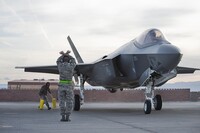 Il caso del generale Grynkewic, Comandante Supremo della NATO in Europa
Se i generali frenano la psicosi bellica dei politici
Il ministro della Difesa tedesco, il socialdemocratico Pistorius, ha ipotizzato davanti al parlamento un attacco russo all’Europa entro il 2029. Per Macron occorre essere pronti anche a “versare il sangue”. Ma il generale che comanda la NATO europea smentisce tutti con i dati dell’intelligence.17 July 2026 - Redazione PeaceLink Albert, international pacifist bulletin
Gaza, July 2026: the crisis continues amid bombings, hunger, and impunity
As of 17 July 2026, the most reliable quantitative data indicates that the overall Palestinian death toll in the Gaza Strip exceeds 73,000 dead and 173,000 injured since the start of the war on 7 October 2023. In July, the list of journalists killed in Gaza has grown longer.17 July 2026 - PeaceLink staff



Articoli correlati
- Albert, international pacifist bulletin
Ukraine: the uprising of the squares against the military "meat grinder"
The sacking of popular Defence Minister Fedorov has sparked unprecedented protests in Kyiv and other Ukrainian cities. At the heart of the anger from protesters and the families of soldiers is the strategy of Commander-in-Chief Syrskyi, accused of sacrificing too many human lives.18 July 2026 - Redazione PeaceLink - Albert, bollettino pacifista internazionale
Ucraina: la rivolta delle piazze contro il "tritacarne" militare
Il siluramento del popolare ministro della Difesa Fedorov accende proteste senza precedenti a Kiev e in altre città ucraine. Al centro della rabbia dei manifestanti e dei familiari dei soldati c'è la strategia del Comandante in Capo Syrskyi, accusato di sacrificare troppe vite umane.18 July 2026 - Redazione PeaceLink - Il caso del generale Grynkewic, Comandante Supremo della NATO in Europa
Se i generali frenano la psicosi bellica dei politici
Il ministro della Difesa tedesco, il socialdemocratico Pistorius, ha ipotizzato davanti al parlamento un attacco russo all’Europa entro il 2029. Per Macron occorre essere pronti anche a “versare il sangue”. Ma il generale che comanda la NATO europea smentisce tutti con i dati dell’intelligence.17 July 2026 - Redazione PeaceLink - Albert, international pacifist bulletin
Gaza, July 2026: the crisis continues amid bombings, hunger, and impunity
As of 17 July 2026, the most reliable quantitative data indicates that the overall Palestinian death toll in the Gaza Strip exceeds 73,000 dead and 173,000 injured since the start of the war on 7 October 2023. In July, the list of journalists killed in Gaza has grown longer.17 July 2026 - PeaceLink staff
sociale.network