Sudan: Darfur's Gold and the United Arab Emirates' Weapons
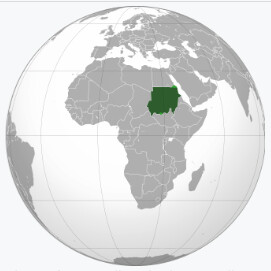
The Sudanese conflict is not a "forgotten" conflict because it holds no interest, but rather a war perfectly suited to the geopolitical interests of foreign powers that are doing everything they can to keep it out of the spotlight. At the center of this web of interests and atrocities, the role of the United Arab Emirates (UAE) emerges.
A war financed by Darfur gold
Darfur is a gold-rich region of Sudan. Darfur's gold is not a resource for development, but fuel for the armed conflict ravaging Sudan.
Tens of thousands of miners work in semi-slavery conditions, while the massive use of mercury and cyanide - used in extraction - is poisoning groundwater and the land for decades to come. .
The war in Sudan pits the Sudanese Armed Forces (SAF), loyal to General Abdel Fattah al-Burhan, against the Rapid Support Forces (RSF), a paramilitary organization led by General Mohamed Hamdan Dagalo, known as “Hemedti,” who is extremely rich because he controls the main gold mine in Darfur. . Behind this conflict lies a ruthless competition for control of the country's immense gold resources.
Sudan, which boasts Africa's third-largest gold reserves, has seen its mining sector become a major "engine of war." The RSF, in particular, has built its power and economic independence on its control of Darfur's gold mines, first and foremost that of Jabal Amer . Through a network of companies, such as Al Junaid , the Dagalo family manages to transform gold into currency and weapons. .
The United Arab Emirates' "double game"
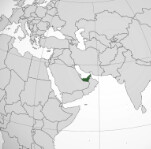
This is where the crucial role of the United Arab Emirates comes in. Dubai has long been one of the world's centers for gold refining and trading. According to numerous independent investigations, over 70% of the gold illegally mined in Darfur is smuggled to the United Arab Emirates , where it is "cleaned" and reintroduced into the legal market, making it impossible to trace. .
In exchange for this unstoppable flow of wealth, the United Arab Emirates (UAE) has been repeatedly accused of providing decisive military support to the RSF . A report by UN experts cited "credible" evidence of the supply of weapons, drones, and logistical support to Hemedti's militia, often via routes passing through Chad, Libya, and Somalia. .
The UAE's strategy would be a classic "double game":
-
Military and logistical support on the ground: weapons, funding and even mercenaries (Colombian, according to some sources) arrive to the RSF to keep them alive and able to fight. .
-
Public relations campaign and humanitarian aid: In parallel, the UAE actively promotes its image as a mediator and aid provider, setting up field hospitals and donating large sums for peace. In 2024, the UAE purchased 97% of Sudan's gold exports, exerting total economic control over the nation. .
The silence of NATO and Russia
The darkest paradox of this conflict is that the UAE, despite accusations of destabilizing Sudan, enjoys substantial international impunity . The reason lies in its strong ties with the West . The UAE is a key NATO partner , with whom it has ongoing discussions to "strengthen the partnership" and a long history of cooperation in NATO-led operations (for example, it sent fighter jets to bomb Gaddafi in 2011). Approximately 3,500 American military personnel are stationed in the UAE. Al Dhafra Air Base is the main installation used by the United States in the UAE. Jebel Ali Port in Dubai is regularly visited by US Navy vessels, including aircraft carriers and submarines, as it is one of the largest ports outside the US capable of hosting large vessels.
Furthermore, the UAE maintains excellent trade relations with Western powers, purchasing billions of dollars worth of advanced weapons. Between 2021 and 2025, the United States was the dominant supplier (about 55% of imports), followed by France and other European partners, including Italy.
As if that weren't enough, some of the Sudanese gold also ended up in the pockets of Russian mercenary soldiers, those who arrived in Africa under the Wagner banner. Part of the Sudanese gold was absorbed by economic networks linked to Wagner and used to finance the group's operations, through smuggling and front companies.
The silence of Europe
The height of this complicity was reached in November 2025, when the European Parliament, after a draft that explicitly condemned the UAE's role in arming the RSF, voted on a final resolution in which every reference to the United Arab Emirates was magically deleted . News sources reported that Emirati delegates, led by envoy Lana Nusseibeh, had lobbied the European Parliament to mediate with policymakers, managing to remove any criticism of the UAE from the final text. Euronews reports that several parliamentary sources spoke of Nusseibeh personally lobbying MEPs, with a stay in Strasbourg from November 24 to 27, 2025. Middle East Eye describes the same dynamic as a “lobbying blitz” that managed to pass a resolution without reference to the UAE’s responsibility in the Sudanese war.
A perfect forgotten war
While all this was happening, Sudan's civilian population was being abandoned to its fate. The United Nations confirmed famine in Al-Fasher and Kadugli . Nearly 90% of the country's hospitals are out of action, and more than 4,300 children have been killed or maimed since the beginning of the armed conflict, a number that is rising sharply due in part to frequent drone strikes on population centers.
The war in Sudan is the perfect forgotten war , not because "no one remembers it," but because it's convenient for many powerful people to forget it . It's a proxy war in which one country's gold is exchanged for weapons from another, while Western governments, closely linked to the United Arab Emirates, raise their shields over the perpetrators of the massacre.
 Glossary
- UAE (United Arab Emirates): One of the world's main hubs for the gold trade. They are accused of being the economic terminal for Sudanese gold trafficking to Dubai, in exchange for which they provide weapons and logistical support to the RSF. They are a federal monarchy in the Persian Gulf, founded in 1971, consisting of seven emirates (Abu Dhabi, Dubai, Sharjah, Ajman, Fujairah, Ras al-Khaimah, and Umm al-Quwain). With Abu Dhabi as its capital and Dubai as its economic hub, the country is known for its rapid development and wealth derived from oil and gas. Sudan has accused the UAE of complicity in the genocide and of providing military, financial, and logistical support to the RSF. The UAE does not recognize the automatic power of the ICJ (International Court of Justice) to adjudicate genocide charges brought by another state, and so the ICJ rejected Sudan's appeal for lack of jurisdiction.
-
RSF (Rapid Support Forces): Sudanese paramilitary organization, protagonist of the conflict. Led by General Mohamed Hamdan Dagalo "Hemedti," it is accused of atrocities and ethnic cleansing. Its power derives from its control of the gold mines in Darfur.
-
SAF (Sudanese Armed Forces): Sudan's regular army, loyal to General Abdel Fattah al-Burhan. It fights against the RSF.
-
Hemedti: nickname of Mohamed Hamdan Dagalo, leader of the RSF. A former mercenary and warlord, he built a business empire based on gold smuggling, which allowed him to purchase weapons and recruit militants.
- The Sentry: US investigative organisation that documented how the Dagalo family (see Hemedti ) owns a luxury real estate portfolio in the United Arab Emirates, specifically in Dubai (worth over £17 million) thanks to the profits from smuggled gold.
-
Jabal Amer: Darfur's largest gold mine. Captured by Hemedti in 2017, it symbolizes the link between resource control and military power in Sudan.
-
“Blood Gold Report”: A global investigation that traced the flow of Sudanese gold to refineries in Dubai and Istanbul, demonstrating how gold profits finance war.
-
The “Strasbourg Scandal”: the November 2025 episode in which the UAE delegation to the European Parliament succeeded – through intense lobbying – in having all condemnations of its actions in Sudan removed from the final resolution, exerting direct pressure on political decision-makers.
Articoli correlati
 Albert, international pacifist bulletin
Still no sanctions against the United Arab Emirates that arm the bloody conflict in Sudan
No sanctions have been adopted against the government of the United Arab Emirates that supports the ruthless Rapid Support Forces militias. As the United Arab Emirates are firmly linked to NATO, the sanctions concern individuals, companies, and financial networks but not the state entity.17 July 2026 - PeaceLink staff- Albert, bollettino pacifista internazionale
Ancora nessuna sanzione verso gli Emirati Arabi Uniti che armano il sanguinoso conflitto in Sudan
Non risultano adottate sanzioni contro il governo degli Emirati Arabi Uniti che sostengono le spietate milizie delle Forze di Reazione Rapida. Essendo gli Emirati Arabi Uniti saldamente collegati alla NATO le sanzioni riguardano persone, società e reti finanziarie ma non l'entità statale.17 July 2026 - Redazione PeaceLink  The tools to impact this chain of death exist
Blood gold
A direct line connects the massacres in Sudan to our jewellery shops. We must break the chain that, through the smuggling of gold, finances the war and transforms the United Arab Emirates into an unpunished hub. Yet in Europe, blood gold continues to be traded with eyes closed.30 June 2026 - PeaceLink staff- Gli strumenti per incidere su questa filiera di morte esistono
Oro insanguinato
Un filo diretto unisce i massacri in Sudan alle nostre gioiellerie. Occorre spezzare la catena che, attraverso il contrabbando dell'oro, finanzia la guerra e trasforma gli Emirati Arabi Uniti in un hub impunito. Ma in Europa si continua a commerciare oro insanguinato chiudendo gli occhi.30 June 2026 - Redazione PeaceLink


sociale.network