The incursions in the Baltic skies: Russian or Ukrainian drones?
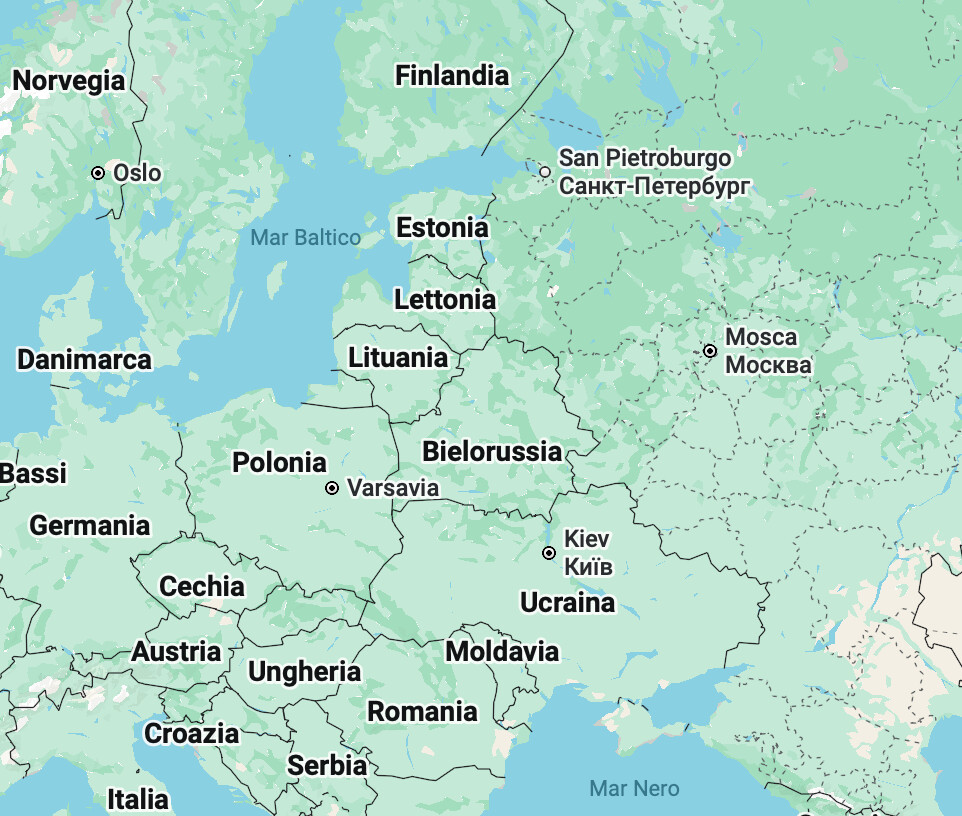 Bad news for NATO. The NATO "air policing" mission in the Baltic States (Estonia, Latvia, Lithuania) has found Ukrainian drones, not Russian, in the skies of the carefully patrolled allied countries during the latest alerts.
This is the detailed reconstruction of sightings in Lithuania, Latvia, and Estonia in 2026. In one case, an entire capital was blocked: parliamentarians, ministers, and nursery children went to air raid shelters. No indictments. But taxpayers are paying for the missions of the fighters.
Russian drones? "No, sorry: they are Ukrainian drones"
The same official reconstructions eventually admit that the drones intercepted in the Baltic skies are Ukrainian drones and not Russian drones. But who knows why Ukrainian drones are right there when Ukraine is not in NATO, unlike Estonia, Latvia, and Lithuania. So what are these stealthy and unlawful Ukrainian drones doing in the Baltic countries that NATO protects from Russia? Who knows. Russia accuses the Baltic countries of turning a blind eye to Ukrainian overflights and providing their airspace for attacks on Russia, while NATO accuses Russia of diverting them with the Baltic countries by disturbing navigation systems through electronic warfare. But the curious thing is that when a Russian drone turns out to be Ukrainian, the script suddenly changes: it is still Russia's fault because it diverted them with electronic warfare. Should it have kept them at home and not diverted them perhaps from where they came?
Propaganda aside, NATO's bad image lies in the fact that the drones we have managed to reconstruct by tracing the alerts of recent months are mostly of Ukrainian origin, and in the remaining cases, their origin is unknown (the classic fig leaf to cover the shame).
However, it is essential to frame this activity in the broader context of the NATO mission. Here are the key points to understand.
The NATO BAP mission
The Baltic Air Policing (BAP) mission has existed since 2004, when Estonia, Latvia, and Lithuania joined NATO. These three countries, in fact, do not have their own combat aviation and rely on allies for the surveillance and defence of their airspace. But since the war in Ukraine broke out with all the drone issue, the mission has gained significant media and propaganda relevance.
An expensive mission for all
The mission has a significant cost, borne by all alliance members, including Italy.
-
Direct costs for the Baltic countries: the three countries contribute financially to the mission, with costs that have increased over time. Lithuania, for example, has allocated about 800 million euros in additional funding just for the purchase of anti-drone systems and radar.
-
Costs for donor countries (like Italy): each country participating in the mission bears the deployment and operational costs of its own assets. For Italy, this means deploying personnel and aircraft such as Eurofighter Typhoon, with a commitment that has been increasing. The Italian participation, which began in 2015, was estimated at around 7 million euros for the first mission, but current costs for the most recent rotations are likely higher.
In practice, the Baltic States and NATO allies are investing resources for an air defence that, in the latest incidents, has had to manage an unexpected and paradoxical threat.
The case of the shootdowns
The BAP mission is tasked with intercepting and, if necessary, neutralising any unauthorised aircraft that violate the airspace of the Baltic States. It is an action to defend the territorial integrity of the Atlantic Alliance.
Here is a table summarising the most recent episodes involving NATO fighters:
| Date | Country | NATO fighter involved | Origin of the drone (according to sources) | Context |
|---|---|---|---|---|
| 19 May 2026 | Estonia | Romanian F-16 | Ukrainian | Probably the first shootdown of a drone in these terms in the Baltics. |
| 8 June 2026 | Latvia | French Rafale | "Foreign" / unidentified | Official sources speak of entry "following Russian electromagnetic warfare". |
| 14 August 2026 | Latvia | Italian Eurofighter | Ukrainian | Confirmed by the Latvian Ministry of Defence. |
The paradox is evident: NATO fighters, paid for by allies to defend the Baltic skies, are tasked with shooting down drones that, according to reconstructions, are mostly Ukrainian and have gone off course due to the interference of Russian electronic warfare. This puts them in the paradoxical situation of having to act against the means of a country (Ukraine) that the alliance supports, but whose military action generates unwanted consequences on NATO territory.
The most recent timeline
25 March 2026: the drone that crashed in Latvia and the criminal proceedings for "genocide"
A drone crashes in Latvia. Authorities launch an investigation and the affair develops in a grotesque and surreal manner.
Sequence of events
-
25 March (day of the incident): a drone crashes on Latvian territory.
-
After the incident: the Latvian State Police initiates criminal proceedings under the chapter of the penal code "Crimes against humanity, peace, war crimes, genocide". The proceedings are opened "for the fact" (par fakti) of the incident, and investigations are ongoing to ascertain responsibilities.
- A strong campaign is launched to denounce the violation of Latvian airspace, and even the crime of genocide is invoked. Many are convinced at this point that Putin is behind it.
-
At this point, Latvian Prime Minister Evika Siliņa candidly declares that "the first information indicates" that the drone is "apparently Ukrainian", based on the fact that Ukraine had launched night attacks against Russian targets, including the port of Ust-Luga.
-
Identification of the drone: the Latvian Armed Forces, after examining the wreckage, confirm that the drone is of Ukrainian origin. It is also specified that the drone entered Latvian airspace from Russia.
-
Diplomatic reaction: the Latvian Ministry of Foreign Affairs summons the Russian diplomatic representative and presents a formal note of protest to Russia, condemning the violation of airspace and the broader context of the "aggressive war of Russia against Ukraine".
The grotesque conclusion
-
The subject of the criminal proceedings for "genocide" is a Ukrainian drone.
-
The proceedings are opened against unknown persons ("for the fact"), but the diplomatic protest is directed at Russia.
Latvia blames Russia for the violation of its airspace, caused by the war that Russia itself is waging against Ukraine, which in turn launches drones that end up off course in the Baltics.
23 March 2026: the incident in Lithuania
A drone crashes into Lake Lavysas, in the Varėna district of southern Lithuania, about 20 km from the border with Belarus.
Sequence of statements
-
23 March (day of the incident): the Lithuanian army reports a "suspicious drone" that has crashed into a frozen lake. Initially, it is hypothesised that it may have come from Belarus, then a Russian drone.
-
24 March (morning): Defence Minister Robertas Kaunas states that it is "very likely" that the drone is Ukrainian and has been diverted from its course due to the interference of Russian electronic warfare.
-
24 March (afternoon): Prime Minister Inga Ruginienė officially confirms: "The drone that crossed our airspace and flew into the Varėna district was a Ukrainian drone and is linked to the operation that the Ukrainians were conducting that night, directed against Russia".
Objective data: the drone was Ukrainian, part of a night attack against Russian targets (probably the ports of Primorsk and Ust-Luga) and was diverted from its course.
29-31 March 2026: incursions in Estonia and Finland
-
29-30 March: Finland reports a violation of its airspace in the southeast and deploys F/A-18 fighters. The object is identified as a Ukrainian AN-196 drone. The Finnish Prime Minister speculates that the strong Russian electronic disturbance may have diverted the drones.
-
31 March: Estonia and Latvia detect further drone activity near their borders with Russia. The Finnish border guard finds a drone on its territory, and Estonia discovers debris in Tartu County.
-
1 April: Estonian armed forces confirm that the drones detected in the country come from Ukraine.
Objective data: all the drones involved in these episodes have been identified as Ukrainian.
7 May 2026: the Rēzekne incident (Latvia) and the political crisis
Two drones crash into an oil depot in the Rēzekne region of eastern Latvia, damaging four tanks.
Objective data
-
Origin of the drone: Ukrainian. Latvian authorities confirm that the drones were part of a Ukrainian attack against targets in Russia and were diverted from their course.
-
Dynamics: according to Latvian authorities, the drones entered the airspace from Russia and were diverted by the interference of Russian electronic warfare.
Political consequences
-
10 May: Defence Minister Andris Sprūds resigns after Prime Minister Evika Siliņa states that anti-drone systems had not been deployed quickly enough.
-
14 May: Prime Minister Evika Siliņa resigns, causing the collapse of the coalition government. Her party, the Progressives, withdrew support after the resignation of the Defence Minister.
19 May 2026: NATO's first shootdown of a Ukrainian drone in Estonia
A Romanian F-16, part of the NATO Baltic Air Policing mission, shoots down a drone in Estonian airspace in the area between Võrtsjärv and Põltsamaa, in southern Estonia.
Objective data
-
Origin of the drone: Ukrainian. Estonian Defence Minister Hanno Pevkur confirms that the drone had "probably Ukrainian origin" and was headed towards targets in Russia.
-
Ukrainian reaction: Kiev officially apologises for the incident, calling it "unintentional" and attributing the diversion to the interference of Russian electronic warfare.
-
Historical significance: it is the first time since their accession in 2004 that the NATO air policing mission in the Baltics "has fired a missile in defence of the Alliance".
20 May 2026: red alert in Vilnius, the capital of Lithuania
A suspicious drone is detected approaching from the border with Belarus. The air alert is activated and the Lithuanian capital goes into chaos.
The account of the alert (10:20 - 11:20):
-
Evacuation of institutions: President Gitanas Nausėda, Prime Minister Inga Ruginienė, and members of parliament are taken to underground bunkers.
-
Alert to the population: an emergency message is sent to the phones of residents of Vilnius ordering them to take shelter.
-
Transport block: Vilnius airport is closed and flights are diverted to Riga; rail traffic is suspended in the capital.
-
Schools and nurseries: schools and nurseries are ordered to take children to shelters.
Origin of the drone: at the time of the alert, the origin of the drone is unknown. On 21 May, Defence Minister Robertas Kaunas states that the objects detected on 20 May are similar to Ukrainian drones from previous weeks, but does not provide a definitive confirmation for that specific incident.
The "out of tune" statement from von der Leyen: on 20 May, during the alert and without knowing the origin of the drone, Ursula von der Leyen writes on X that the responsibility lies with Russia and Belarus: "Russia and Belarus bear direct responsibility for drones endangering the lives and security of people on our eastern flank". The message appears premature and reckless as it attributes responsibility before the Lithuanian authorities ascertain the nature of the intruder.
Lithuanian Defence Minister Robertas Kaunas, on 21 May, states that the detected objects "are similar to the Ukrainian drones from previous weeks", but does not provide a definitive confirmation for that specific incident. The origin remains officially unascertained. And what if it had been Russian?
21 May 2026: new incursion in Latvia
Latvian armed forces report at least one drone in the country's airspace. NATO fighters are scrambled to counter the threat and an air alert is issued in several eastern regions of Latvia.
The various attributions
| Source | Attribution | Detail |
|---|---|---|
| International press (Reuters, SkyTG24, Eastern European media) | Ukraine | The media link the incident to the series of episodes from previous days, framing it as a Ukrainian drone diverted from its course due to Russian interference with the GPS signal. |
| Latvian Ministry of Foreign Affairs | No confirmation | The Ministry publishes a statement asserting that Latvia has never opened its territory or airspace to Ukrainian drones for attacks against Russia, describing Russian accusations of complicity as a "disinformation campaign". |
| Mark Rutte (NATO Secretary General) | No confirmation, but controversial | The Secretary General calls the Russian accusations that the Baltics would grant air corridors to Ukraine "ridiculous", stating that Ukrainian drones ended up in European territory not by the will of Kiev, but because of the war unleashed by Russia. |
8 June 2026: French shootdown in Latvia
A French Rafale fighter, part of the NATO Baltic Air Policing mission, shoots down a drone in Latvian airspace. This is the first shootdown carried out by French fighters in this mission.
Objective data
-
The event: on 8 June 2026, a French Rafale fighter shoots down a drone in Latvian airspace, near the border with Russia.
-
The official position: Latvian authorities communicate that it is a "foreign drone" or "unidentified", without specifying whether it was Russian or Ukrainian. The Latvian Ministry of Defence states that the drone entered Latvia "following Russian electromagnetic warfare" and that it was not possible to determine its origin with certainty. Legitimate doubt: would Russia ever divert its own drone?
-
The recovery of fragments: after the shootdown, initial searches yield no results. About a week later, "fragments of objects" that could be linked to the drone are found. The fragments are subjected to analysis and authorities open a criminal investigation. Despite the finding, the origin and exact model of the drone are never officially disclosed.
The various interpretations
| Source | Attribution | Detail |
|---|---|---|
| Official NATO/Latvia position | Unidentified | "Foreign drone", "unidentified aircraft". Cause of entry: Russian electronic warfare. |
| International press (e.g. Reuters, The Independent) | Ukraine (interpretation) | Media frame the event as the latest in a series of incidents with Ukrainian drones diverted from their course. |
| Some outlets (e.g. Hindustan Times, 24sata) | Russia (interpretation) | Describe the drone as a "Russian drone" shot down by NATO. |
The inconsistency of the official communication
-
The paradox: authorities declare that the drone entered "following Russian electronic warfare". The same dynamic has been used for all previous incidents with Ukrainian drones (March, May, August). However, for this specific episode, the Ukrainian origin is not officially confirmed.
-
The logical reasoning: if the cause of entry is Russian electronic warfare, and Russian electronic warfare diverts Ukrainian drones (as stated by the authorities for other incidents), then the drone of 8 June was very likely Ukrainian. However, this logical deduction remains an interpretation, not an officially certified fact.
14 August 2026: Italian shootdown in Latvia
An Italian Eurofighter, part of the NATO Baltic Air Policing mission, shoots down a drone in the Balvi region of eastern Latvia.
Objective data
-
Origin of the drone: the Latvian Ministry of Defence confirmed on 20 August 2026 that the downed drone was Ukrainian.
-
Dynamics: according to Latvian authorities, the drone entered the airspace from Belarus due to the interference of Russian electronic warfare.
-
Reaction: Latvian Defence Minister Baiba Braze thanked Italy for the intervention.
Summary of objective data
| Date | Location | Event | Drone origin (confirmed) | Grotesque/surreal notes |
|---|---|---|---|---|
| 23 March | Lithuania (Varėna) | Drone crashes into Lake Lavysas | Ukraine (confirmed on 24 March by Ruginienė) | Was part of an attack against Russian targets |
| 25 March | Latvia | Drone crashes | Ukraine (confirmed by Latvian Armed Forces) | Criminal proceedings for "genocide"opened for a Ukrainian drone. Diplomatic protest to Russia. |
| 29-31 March | Estonia, Finland | Airspace violations | Ukraine (confirmed on 1 April) | AN-196 drones identified |
| 7 May | Latvia (Rēzekne) | Two drones crash into depot | Ukraine (confirmed) | Triggers political crisis and government collapse |
| 19 May | Estonia | Romanian F-16 shootdown | Ukraine (confirmed by Pevkur and Kiev) | First NATO shootdown in the Baltics |
| 20 May | Lithuania (Vilnius) | Red alert, evacuation of leaders | Not confirmed with certainty | Von der Leyen attributes to Russia/Belarus before ascertainment |
| 21 May | Latvia | Aerial incursion | Press: Ukraine | Latvian authorities and NATO: no official confirmation |
| 8 June | Latvia | French Rafale shootdown | Official: unidentified | Cause: Russian electronic warfare. Logic: probably Ukrainian. Fragments recovered but origin not disclosed. |
| 14 August | Latvia (Balvi) | Italian Eurofighter shootdown | Ukraine (confirmed on 20 August) | Second NATO shootdown |
The surreal picture that emerges
The chronicle of incidents in the Baltic States reveals several paradoxes.
-
All drones identified with certainty are Ukrainian. No Russian drone has been identified with certainty in the Baltic skies so far (the only "presumed" Russian one was in Romania).
-
Latvia opens criminal proceedings for "genocide" for the entry of Ukrainian drones, but presents a diplomatic protest to Russia.
-
NATO shoots down Ukrainian drones (19 May, 14 August) and declares them as such, but for 8 June chooses not to reveal the origin, even though the dynamic (Russian electronic warfare) is the same.
-
Russia is accused of violating Baltic airspace but the drones are Ukrainian even if probably diverted by Russian electronic countermeasures, which however - in case this was the case - are justified due to the violation of Russian airspace.
This reconstruction is based exclusively on the available data and the official statements of the competent authorities, faithfully reporting the inconsistencies and absurdities that emerge from the facts.

https://chat.deepseek.com/share/9e34ujovbwx58qh5iu
For the case of 20 May 2026
https://www.perplexity.ai/search/ae0e568c-11ba-485f-8695-e112c1c22ab0
https://ai.peacelink.it/sessioni?id=3yonouIpryM
Articoli correlati
 Albert, bollettino pacifista internazionale
Gli sconfinamenti sui cieli baltici: droni russi o ucraini?
Questa è la ricostruzione dettagliata degli ultimi allarmi in Lituania, Lettonia ed Estonia. In un caso è stata bloccata un'intera capitale: parlamentari, ministri e bambini degli asili sono fuggiti nei rifugi antiaerei. Nessun rinvio a giudizio. Ma i contribuenti pagano le missioni dei caccia NATO.21 August 2026 - Redazione PeaceLink Diffonderebbe fra i bambini "narrazioni filorusse" e sarebbe una "minaccia alla sicurezza nazionale"
Zelensky censura un cartone animato
Si tratta di Masha e Orso, un famoso cartone animato diffuso in tutto il mondo, che racconta le vicende di Masha, una bambina molto attiva e birichina, e di Orso, un animale saggio, paziente e tranquillo che vive nel bosco.21 August 2026 - Redazione PeaceLink- E' accaduto in Lettonia il 14 agosto
Fuoco amico: l'Italia abbatte un drone ucraino
Qualche giorno fa l'Italia ha fatto decollare i suoi Eurofighter in Lettonia per la missione NATO di polizia aerea, a difesa del Paese baltico dalla minaccia russa. In un primo tempo si è pensato a un drone russo per poi scoprire che era ucraino. La Lettonia ha comunque ringraziato l'Italia.19 August 2026 - Redazione PeaceLink  Ha rinunciato alla cittadinanza russa e ha ripetutamente condannato l'invasione dell'Ucraina
Khrzhanovsky, un regista russo contro il totalitarismo e la guerra in Ucraina
DAU è un'opera che indaga il male, che mostra come i sistemi totalitari penetrino nelle persone. Eppure il ministero degli Esteri ucraino ha condannato l'inclusione del suo film "DAU" alla Mostra Internazionale d'Arte Cinematografica di Venezia.19 August 2026 - Redazione PeaceLink


sociale.network