Europe forced to buy the F-35 to utilise the B61-12 atomic bomb
For years, Europe has entertained the idea of having its own fighter jet. An aircraft that would free it from dependence on the United States, that would provide jobs for the continental military industry, that would demonstrate an autonomous Europe even in the skies. Then, one by one, the alternatives fell away. And today, while Steadfast Noon takes place in Italy, the reality is clear to all: the only aircraft capable of fully utilising the new B61-12 nuclear bomb is the American F-35A. And Europe, whether it likes it or not, is aligning itself to its standards.
The failure of European alternatives
The FCAS (Future Combat Air System) programme, the Franco-German-Spanish project designed to compete with the F-35, has effectively sunk. The GCAP, the Italian-British-Japanese programme to launch the sixth-generation fighter, aims for 2035 and has no nuclear ambitions. The Eurofighter Typhoon, the leading European fighter, is not certified for the B61-12 atomic bomb and will not be: certification would take between 7 to 10 years, and the United States itself has no interest in sharing it.
The result is a forced convergence. Germany, which in 2019 had ruled out the F-35 as a successor to the Tornado, changed its mind in 2022 and ordered 35 units precisely to maintain participation in NATO's nuclear sharing. The first German F-35A was delivered in September 2026, destined for the Büchel base, where it will replace the Tornados in the nuclear role. Italy has ordered 75 F-35As, the Netherlands 58, Belgium 34. The Netherlands was the first European country to complete the transition, becoming fully operational in the nuclear role with the F-35A.
Why only the F-35A can utilise the B61-12


The B61-12 is not a free-fall bomb like the previous 61s. It is equipped with a tail kit, with precision guidance that allows it to glide towards the target with a margin of error of about 30 metres. It has a yield adjustable from 0.3 to 50 kilotons. But its full "digital" capability is only expressed if the aircraft carrying it is able to transmit the necessary guidance data.
The F-35A was certified for the B61-12 on 12 October 2023, and it is the only fifth-generation fighter in the world to possess this certification. It can carry the bomb in the internal bay, maintaining stealth, and fully utilise the guided mode. The German and Italian Tornados, which still participate in nuclear exercises today, can only carry the B61-12 in unguided mode, with significantly reduced performance.
The political consequence that no one says out loud<\/span><\/h3>
This technological convergence on the characteristics of the F-35 has a political cost. As a recent analysis summarised, the choice of the F-35 effectively acknowledges that for the next 30 years the backbone of the German air force will come from America, not from Europe. It is not just a matter of hardware. The F-35 is a "flying supercomputer" with over 8 million lines of code, and its operation depends entirely on American software and logistical networks. European operators do not own this software. They cannot modify or adapt it without Washington's approval.
In other words, Europe has discovered that its nuclear deterrent capability depends on an American aircraft that it does not fully control.
Steadfast Noon and the single standard
In conclusion, Steadfast Noon 2026 is not just an exercise: it is a showcase of a structural dependence on the United States. Not only because the B61-12 atomic bombs are American but because the entire hardware and software ecosystem to make them fully operational is based on standards set by the United States.
This year's Steadfast Noon makes it clear to all NATO nations that there is only one nuclear standard for the future and it revolves around a single aircraft: the F-35. The Tornados will soon retire and everyone will have to buy F-35s. The Germans, who did not want to purchase F-35s, have had to do so obtorto collo to avoid being excluded from the atomic club: their Eurofighters cannot use nuclear bombs due to a clear denial from the Pentagon.
And so Europe, with this exercise, is acknowledging that its nuclear deterrent relies on American software that it does not control. And that the software it did control, that of the Eurofighter, could not be compatible with the atomic bomb. The digitalisation of nuclear warfare aligns fighters to American standards and to a single model: the F-35. Which obviously will have no rivals in NATO if one wishes to be part of nuclear sharing.
Articoli correlati
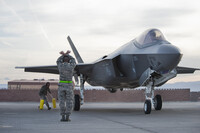 Cosa emerge dall'esercitazione nucleare Steadfast Noon
Europa costretta a comprare l'F-35 per sfruttare la bomba atomica B61-12
L'Europa voleva un caccia proprio ma si è ritrovata a dover comprare quello americano. L'Eurofighter infatti non può lanciare le bombe atomiche e il futuro caccia di sesta generazione GCAP non avrà capacità nucleare. E così l'F-35 americano detterà le sue regole di superiorità per il futuro.19 October 2026 - Redazione PeaceLink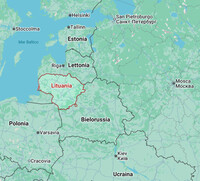 E' successo ieri, sono dovuti decollare d'urgenza due caccia italiani
La Lituania accusa Mosca di sconfinamento aereo (ma il drone è ucraino)
Il presidente lituano Nausėda punta il dito sulla Russia e dichiara: "La guerra di aggressione della Russia contro l'Ucraina si sta riversando sul fianco orientale della NATO e dell'UE". Poi l'Ucraina si scusa: "Ci rammarichiamo per l'incidente avvenuto questa mattina nello spazio aereo lituano".19 October 2026 - Redazione PeaceLink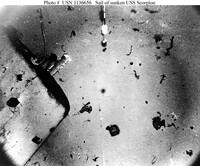 L’opinione pubblica non è informata
Le armi nucleari smarrite e mai più recuperate
Sono adagiate sul fondo degli oceani, perse a causa di incidenti aerei o intrappolate nei relitti di sottomarini affondati. Questi ordigni atomici, soggetti a lenta e inesorabile corrosione, rimangono monumenti radioattivi silenziosi, testimonianze di epoche ad altissima tensione.18 October 2026 - Redazione PeaceLink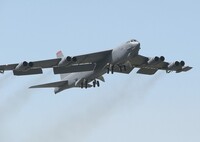 Quinto giorno di esercitazione nucleare
"Abbiamo perso le bombe atomiche"
A chi guarda le esercitazioni nucleari come Steadfast Noon con normalità e assuefazione giova ricordare qualche trascorso della Guerra Fredda. Come quando venne lanciato uno spaventoso "Broken Arrow" a Goldsboro, nel North Carolina. O a Palomares, in Spagna. Ecco la lista completa degli incidenti.17 October 2026 - Redazione PeaceLink


sociale.network