Vietnam chairs UN conference on Nuclear Non-Proliferation Treaty
 New York – From April 27 to May 22, the 11th Review Conference of the Nuclear Non-Proliferation Treaty (NPT) is chaired by Vietnam , represented by Ambassador Do Hung Viet , Permanent Representative to the UN.
"A spirit of constructive engagement, dialogue, and multilateral cooperation must guide us," said Do Hung Viet. These words take on particular weight when read in light of his country's history.
Guterres' warning: "Warheads on the rise, nuclear tests back on the table."
UN Secretary-General António Guterres' opening remarks sounded a wake-up call. He declared: "For the first time in decades, the number of nuclear warheads is increasing, and nuclear testing is back on the table ."
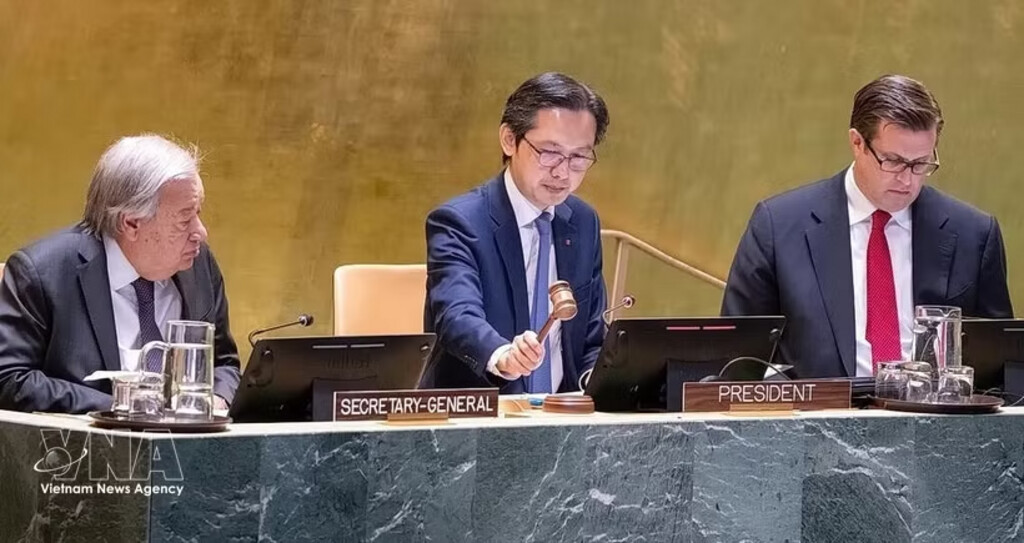
A statement that turns back the clock of history, to the darkest years of the Cold War, when the world lived in the nightmare of the constant threat of nuclear conflict. Guterres described the NPT as "an irreplaceable cornerstone" of the global non-proliferation and disarmament regime, but he was forced to bitterly acknowledge that its pillars are now creaking.
The Secretary General is concerned about three converging phenomena:
-
the modernization of nuclear arsenals by the great powers;
-
the escalation of geopolitical tensions in many hot spots around the planet;
-
the erosion of trust in multilateral mechanisms.
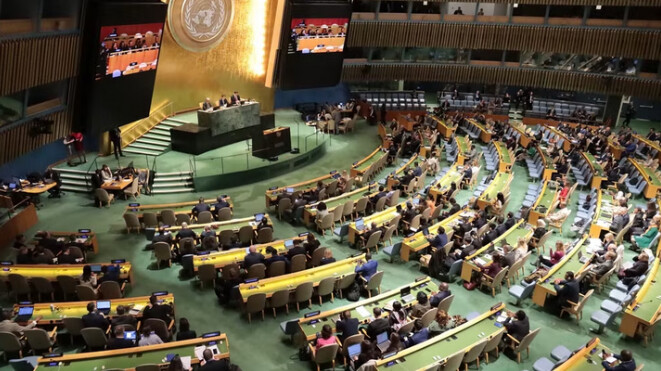
 The UN conference on the NPT on 27 April 2026Source: VNA - agenzia del governo vietnamita https://vietnamlawmagazine.vn/vietnam-chairs-inaugural-session-of-11th-npt-review-conference-79322.html
"We need to rebuild trust between countries, promote strategic dialogue, and prevent actions that could undermine the Treaty," Guterres urged, calling on member states to recommit to the three pillars of the NPT: non-proliferation, disarmament, and the peaceful use of nuclear energy.
Vietnam: From Victim of Aggressive War to Mediator for a Nuclear-Free World
Vietnam is a living memory of what happened when chemical agents and massive bombings were unleashed on a civilian population. Decades after the end of the war, the consequences of Agent Orange continue to scar the land and its people.
It is precisely from this deep wound that Vietnam's determination to promote nuclear disarmament today stems. As Ambassador Do Hung Viet reiterated: "We consistently support complete and non-discriminatory nuclear disarmament."
A message that Guterres wanted to emphasize forcefully: the Vietnamese presidency represents an opportunity for developing countries to make their voices heard in the global disarmament process. And, we might add, a lesson for the permanent members of the Security Council, often the first to modernize their nuclear arsenals.
An arms race that worries the world
The New York Conference – which brings together the 191 member states of the Treaty – has an ambitious goal: to find practical measures to strengthen the implementation of the Treaty in a world where the risk of renewed proliferation is real.
Guterres's words resonate like a warning: putting nuclear testing back on the table isn't a rhetorical threat. It's a real possibility, one that risks shattering decades of informal moratorium and triggering a new, extremely dangerous arms race.
An approach of a non-nuclear country, but not for this a silent one
The choice of Vietnam as president is no coincidence. As a non-nuclear country , its role as mediator is perceived as less "self-interested" than that of the nuclear powers. Precisely for this reason, its voice can be a bridge between the global North and South.
"Vietnam is committed to promoting unity among Member States, particularly by amplifying the voices of developing countries, in the pursuit of a world free of nuclear weapons," reads the statement issued by the Vietnamese mission to the UN.
And while the superpowers discuss modernizing their arsenals, Hanoi reminds the world that those who have suffered war want nothing more than peace.
What to expect from the Conference
The work, which began with a general debate, will continue with in-depth sessions on disarmament, non-proliferation, and peaceful nuclear cooperation. It is hoped that Vietnam's presidency will be able to guide delegates toward a consensus-based final document , something that has not always been achieved in previous editions.
But beyond formal declarations, the real challenge will be to transform words into concrete actions, in an era in which – as Guterres warned – the specter of the atomic bomb is once again haunting not only speeches but also governments' military agendas.
Sources: Vietnam News Agency (VNA), United Nations (speech by Secretary-General António Guterres, 27 April 2026).
Photo credits: VNA (Ambassador Do Hung Viet at the Presidency of the Conference).
See also
 Bollettino internazionale per la pace e il disarmo
Conferenza di revisione delle Nazioni Unite del Trattato di non proliferazione nucleare (TNP)
Il mondo non può permettersi un terzo fallimento consecutivo. Un Trattato di non proliferazione nucleare svuotato di significato non solo aprirebbe la strada a una corsa agli armamenti incontrollata, ma minerebbe anche la credibilità stessa della diplomazia per la risoluzione dei conflitti.21 April 2026 - Redazione PeaceLink

Articoli correlati
 Albert, international pacifist bulletin
Ukraine: the uprising of the squares against the military "meat grinder"
The sacking of popular Defence Minister Fedorov has sparked unprecedented protests in Kyiv and other Ukrainian cities. At the heart of the anger from protesters and the families of soldiers is the strategy of Commander-in-Chief Syrskyi, accused of sacrificing too many human lives.18 luglio 2026 - Redazione PeaceLink- Albert, bollettino pacifista internazionale
Ucraina: la rivolta delle piazze contro il "tritacarne" militare
Il siluramento del popolare ministro della Difesa Fedorov accende proteste senza precedenti a Kiev e in altre città ucraine. Al centro della rabbia dei manifestanti e dei familiari dei soldati c'è la strategia del Comandante in Capo Syrskyi, accusato di sacrificare troppe vite umane.18 luglio 2026 - Redazione PeaceLink  Il caso del generale Grynkewic, Comandante Supremo della NATO in Europa
Se i generali frenano la psicosi bellica dei politici
Il ministro della Difesa tedesco, il socialdemocratico Pistorius, ha ipotizzato davanti al parlamento un attacco russo all’Europa entro il 2029. Per Macron occorre essere pronti anche a “versare il sangue”. Ma il generale che comanda la NATO europea smentisce tutti con i dati dell’intelligence.17 luglio 2026 - Redazione PeaceLink Albert, international pacifist bulletin
Gaza, July 2026: the crisis continues amid bombings, hunger, and impunity
As of 17 July 2026, the most reliable quantitative data indicates that the overall Palestinian death toll in the Gaza Strip exceeds 73,000 dead and 173,000 injured since the start of the war on 7 October 2023. In July, the list of journalists killed in Gaza has grown longer.17 luglio 2026 - PeaceLink staff


sociale.network