Global Overview of Geopolitical Conflicts and Pacifist Movements
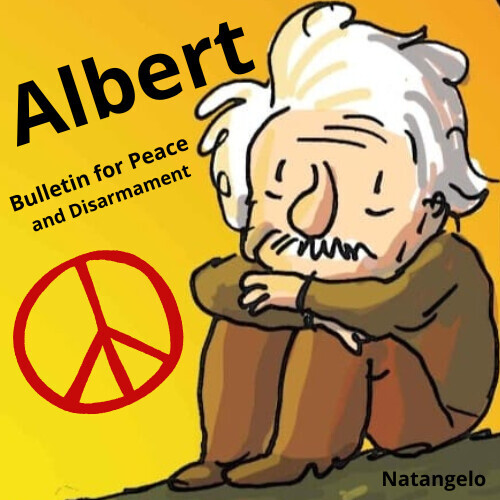
ALBERT – International Bulletin for Peace and Disarmament
There was a time when the peace movement could count on genuine international bulletins. Periodic publications, often produced by pacifist networks that gathered information from dozens of countries, translated it, analysed it, and returned it as an organic, shared narrative. Those bulletins have disappeared. Today social networks give the illusion of instantaneous global communication: people share, comment, and "like." In reality, beyond good intentions, what emerges is a chaotic, disordered flow of information, fragmented into a thousand streams. Every association publishes its own press release, every campaign launches its own hashtag, every group organises its own initiative. But the overall picture, the global vision, the context — everything that allows one to understand that the struggle is one and the same — is lost. Pacifist information thus risks becoming background noise, easily ignored by the mainstream media and public opinion.
It is in this context that Albert is born — the new international bulletin for peace and disarmament.
Contents
- Sudan: the world's largest humanitarian crisis today
- The genocide of Gaza
- The risk of nuclear war has never been higher
- A denuclearised Africa
- ZOPACAS: a zone of peace for Africa and South America
- The military base that violates the Pelindaba Treaty
- International campaign against military spending
- The 2030 Agenda at risk: the human cost of rearmament
- Germany: youth revolt against the reintroduction of conscription
- Brussels: "Welfare not Warfare" — Europe mobilises against rearmament
- The war in Ukraine: the case of Russian deserter Georgy Avaliani
- Australia: David McBride is still in prison for revealing war crimes in Afghanistan
- Israel: pacifists resist and grow
- The resistance of Japanese pacifists: the challenge of rearmament
- Rwanda and M23: the military plunder of Congolese coltan
1 – Sudan: the world's largest humanitarian crisis today
While world powers focus their attention elsewhere, Sudan has sunk into an unprecedented humanitarian catastrophe. For more than three years, the country has been torn apart by a war that has already surpassed many other contemporary conflicts in terms of casualties and levels of destruction. Yet the international community is distracted, and this war has been "forgotten" because no one finds it convenient to remember it. In the first item of the bulletin, we attempt an analysis of the causes and report the unheeded appeal of UNICEF.
1a – The war the world has erased from its agenda
The date of 15 April 2026 marks a tragic anniversary: three years of war between the Sudanese Armed Forces (SAF) and the Rapid Support Forces (RSF). Ignited on 15 April 2023 when the RSF seized control of vast areas of Khartoum, the war quickly transformed into one of the worst humanitarian crises of our time, often described as "the forgotten war" owing to the extremely scant media coverage it has received. Attention has been focused on the bloody armed conflict in Ukraine.
After a first year in which the war in Sudan had been largely forgotten by global media, certain episodes of extreme violence — such as the El Fasher massacre in the second half of 2025 — briefly returned the world's attention to the country.
But that attention lasted very little. The genocide of Palestinians in Gaza polarised public focus. Furthermore, the explosion of other international events, such as the war in Iran, rapidly closed the media window for Sudan.
1b – The figures of the disaster
The figures describing the humanitarian disaster in this African war are merciless and tell a story of immeasurable suffering.
Deaths and displacement: For the ongoing conflict (2023–2026), the most consolidated estimates speak of approximately 25,000–30,000 "official" deaths, with broader estimates reaching over 150,000 when hunger, disease, and indirect consequences are included. More than 11 million people are internally displaced, while over 4.5 million have fled across borders — particularly to Chad, South Sudan, and Egypt — placing severe strain on those nations' already fragile reception systems.
A lost generation: Around 8 million children have been out of school for three years, and in Darfur the situation is even more dramatic. An unknown number of children have been killed, mutilated, raped, or recruited into the fighting.
Famine and food shortages: Around 28.9 million people across the country are in a situation of severe food insecurity, while for over 10 million the hunger is already extreme, with certain areas of North Darfur officially declared to be in a state of famine.
Collapse of essential services: More than 80% of hospitals are out of action due to fighting and looting. Interrupted medical supplies, paralysed hospitals, staff without pay: the indirect consequences of the conflict — the spread of cholera, malnutrition, and epidemics — are claiming as many victims as the weapons themselves.
1c – A dramatic comparison with Gaza
The genocide of Gaza has devastated a population of 2.3 million; in Sudan the death toll is dramatically comparable to that of Gaza (over 70,000), but the number of Sudanese displaced is far higher simply because of numerical scale. The war in Sudan has struck a population vastly larger than that of Gaza.
Amnesty International writes: "With more than 15 million people forced to flee their homes, Sudan currently represents the most serious displacement crisis in the world. More than 30 million people need humanitarian aid, and over 26 million are in a state of severe food insecurity. According to the United Nations, since 2023 the death toll amounts to at least 150,000." It is for this reason that it is described as "the world's most serious humanitarian crisis."
1d – The blood of the youngest: the UNICEF appeal and the comparison with 2004
On 28 April 2026, UNICEF issued a "Child Alert." The warning describes a situation in which five million children in the Darfur region "are in a state of extreme deprivation," with some areas of North Darfur where acute malnutrition has reached famine-level conditions.
The data are alarming: in the first three months of 2026 alone, at least 160 children were killed and 85 wounded, with a worsening trend compared to the same period last year. Violence against minors includes the killing of at least 1,300 children in the city of El Fasher alone, many of them struck by explosives and drones.
The UNICEF alarm is a chilling déjà vu recalling the Darfur crisis of 2004. However, unlike 2004 — when the world mobilised driven by an unprecedented global awareness campaign led by Hollywood and the media — the international response today has been extremely limited.
As the UNICEF representative in Sudan stated, "twenty years ago, Hollywood stars were racing to board planes and buses to visit Darfur. Today, interest is zero."
The epicentre of the Sudanese crisis is once again the Darfur region.
The latest UNICEF communiqué reads: "In Darfur, children are being killed and maimed, uprooted from their homes and pushed into extreme hunger, disease, and trauma. Nowhere has the impact been more severe than in Al Fasher. Since April 2024, more than 1,500 grave violations against children have been verified in Al Fasher, including the killing and maiming of over 1,300 children, many with explosive weapons and drones, as well as sexual violence, abduction, and recruitment and use by armed groups."
1e – The role of the United Arab Emirates in the war
The conflict in Sudan has become a battleground for regional power games. While Egypt, Turkey, and Saudi Arabia support the Sudanese army, the main foreign power involved in the conflict is the United Arab Emirates, which is accused of supplying weapons to the Rapid Support Forces. The evidence of this arms supply is overwhelming. Crates of Kornet missiles bear the inscription "Abu Dhabi" and "UAE Joint Logistics Command." A senior Sudanese official declared: "The evidence has accumulated and we now know. Sudan has been destroyed because of the Emirates."
1f – The business of blood gold
It must be said that the United Arab Emirates have a specific interest in Sudan. In exchange for the weapons supplied, the Emirates receive gold. In recent years, the Emirates have imported from Sudan nearly 2 billion dollars' worth of gold, largely extracted from mines controlled by the RSF in the western region of the country.
1g – NATO's silence
Despite the overwhelming evidence, the United Arab Emirates have not only not been sanctioned, but continue to be regarded as a strategic partner of the West. The secret of this immunity lies in the enormous economic and financial power of the Emirates. The Emirates invest billions in Europe and the United States, purchase advanced weapons (including Italian ones), and are a key partner in both the energy and defence sectors.
The West, through its financial ties with the Emirates, its investments, and its Middle Eastern geopolitics, practises a sort of double standard: on the one hand it takes a firm stance against those who violate human rights if they belong to the opposing geopolitical camp; on the other, it falls silent when atrocities come from a wealthy ally and business partner.
1h – The Berlin failure: diplomacy in pieces
The international conference on Sudan held in Berlin on 15 April 2026, on the third anniversary of the outbreak of the war, clearly revealed the deep divisions within the international community.
Despite nearly €1.5 billion in humanitarian aid collected, the countries of the Quadrilateral Security Dialogue (the United States, Saudi Arabia, the United Arab Emirates, and Egypt) were unable to reach agreement on a joint statement, owing to the rivalry between Saudi Arabia (supporting the Sudanese national army) and the United Arab Emirates (supporting the RSF).
This diplomatic failure represents a further stain on the international community, which has shown itself capable of mobilising resources for other conflicts, but incapable of reaching an agreement to stop the weapons in Sudan.
1i – A crossroads for humanity
Sudan is today the world's worst humanitarian crisis, yet it remains absent from the international public debate. UNICEF has launched an appeal for $962.9 million for 2026, but has received only 16% of the necessary funds; while in the field, a generation of children risks being lost forever. An appeal that twenty years ago would have triggered a massive global mobilisation, but which today is met with a deafening silence.
The conflict is endlessly fuelled by the inflow of weapons and capital interested in raw materials such as gold. But the absence of an international diplomatic response and strong media pressure allows this massacre to continue without consequences for those responsible.
The cry of the Comboni missionary Father Diego Dalle Carbonare sums up the frustration of all those who watch helplessly: "We talk about Gaza, about Ukraine, now about the war in Iran. Rightly so, but I wonder why no one cares about the fate of millions of Sudanese."
Today Sudanese mothers continue to watch over their children who have nothing to eat, while the warlords and foreign governments trade gold and arms to prolong a bloody conflict that makes no headlines.
2 – The genocide of Gaza
The death toll since the beginning of the genocide in Gaza is staggering. On 12 May 2026, the official count by the Gaza health authorities reached 72,740 dead and 172,555 wounded. But the real figure is far higher: hundreds of bodies still lie under the rubble and tens of thousands of missing persons have never been found.
| Period | Deaths | Wounded |
|---|---|---|
| Total since 7 October 2023 | 72,740 | 172,555 |
| Since the "ceasefire" (11 October 2025) | 854 | 2,453 |
In addition, 1.8 million displaced persons are entirely dependent on international aid.
In April 2026, only 4,503 trucks of aid entered out of a minimum of 18,000 stipulated by the ceasefire agreement. Only 25% of the agreed aid manages to enter. The effect is the paralysis of essential services: drinking water, healthcare, electricity, and even the possibility of burying the dead with dignity.
2a – The Flotilla
The Israeli naval blockade, in force since 2007, continues to be challenged by international nonviolent initiatives. From 30 April to 10 May, the Global Sumud Flotilla attempted to break the blockade in order to deliver humanitarian aid directly to Gaza. The flotilla, composed of 22 vessels and approximately 175 activists, was intercepted by Israeli warships off Crete. The activists report having been stormed in an act of international piracy. Two members of the steering committee — Thiago Ávila (Brazilian) and Saif Abukeshek (Spanish-Swedish citizen) — were detained for more than a week and ultimately expelled by the Israeli government.
The Flotilla activists have pledged to continue their mobilisation.
2b – The International Court of Justice
The case brought by South Africa against Israel for genocide at the International Court of Justice (ICJ) continues, with the world divided and new geopolitical tensions arising. Between March and April, Iceland and the Netherlands declared their intention to join Pretoria's case — a sign that the legal weight of the charges is beginning to make headway even in Europe.
On other positions is Annalena Baerbock, former leader of the German Greens, then Germany's Foreign Minister and currently President of the United Nations General Assembly. Baerbock has defended Israeli strikes on civilian sites as legitimate self-defence, arguing that certain locations can "lose their protected status" if used by armed groups — in line with Israeli doctrine. In speeches during 2024, such as the one to the Bundestag, she emphasised Israel's right to self-defence following 7 October, criticising accusations of genocide as unfounded.
2c – Journalists and the word "genocide"
In the United Kingdom, a battle took place over whether journalists were permitted to use the word "genocide" with regard to the military actions carried out by the Israeli army against civilians. The use of the term "genocide" in relation to Israel was often obstructed by legal challenges and political pressure, and many media outlets avoided it so as not to incur costly lawsuits.
On 12 February 2026, IPSO (the UK press self-regulatory body) issued its ruling, clarifying that newspapers have broad discretion in the use of language — especially in opinion pieces — and that accusing Israel of genocide falls within freedom of expression and editorial discretion.
The IPSO ruling drew a clear line in favour of freedom of expression, and since then British newspapers have been able to use the term with greater confidence.
On the question of "genocide" in Gaza, Amnesty International formalised its position in a dedicated FAQ.
3 – The risk of nuclear war has never been higher
The Doomsday Clock is a symbolic indicator devised in 1947 by the Bulletin of the Atomic Scientists (University of Chicago) to represent humanity's proximity to extinction, caused by the threat of nuclear weapons. Midnight symbolises the end of the world.
On 27 January 2026, the Bulletin of the Atomic Scientists (BAS) moved the hands of its famous Doomsday Clock to 85 seconds from midnight, establishing the new and most alarming record since the indicator was created in 1947 — surpassing its previous readings of 89 and 90 seconds. The decision, based on the assessment of BAS experts, reflects a landscape of rapidly worsening existential dangers. The "nuclear threat" remains the pivot of their analysis, aggravated by geopolitical conflicts conducted in the shadow of potential nuclear escalation, growing competition between powers, and the failure of nuclear disarmament agreements.
During the Cuban Missile Crisis (October 1962), the Doomsday Clock was set at 7 minutes from midnight. In January 2026, the clock marks the greatest danger ever recorded, with only 85 seconds to midnight.
The most immediate cause of this alarm is the collapse of the historic nuclear arms control system. As BAS president Daniel Holz recalled, in 2026 "for the first time in more than half a century, there will be nothing to prevent an uncontrolled nuclear arms race." The architecture of treaties that provided a semblance of stability during the Cold War is now in ruins.
3a – The collapse of the disarmament architecture: INF and New START
The arms control framework, built over decades, has been dismantled. The following table shows its current state.
| Treaty | Period in force | Purpose | Current situation (May 2026) |
|---|---|---|---|
| INF Treaty (1987) | 1987–2019 | Eliminate ground-launched intermediate-range nuclear missiles (500–5,500 km). | COLLAPSED. The USA and Russia mutually withdrew in 2019, accusing each other of violations. The regulatory vacuum is fuelling a new intermediate-range arms race in Europe and Asia. |
| New START (2010) | 2011–5 February 2026 | Limit strategic nuclear warheads to 1,550 per side and delivery vehicles to 700. Provided for on-site inspections for verification. | EXPIRED AND NOT RENEWED. On 5 February 2026 it expired without a replacement agreement or extension. President Trump insisted on including China as well, a condition that made negotiation impossible. |
The expiry of New START in particular has left the world without any legally binding limit on the arsenals of the two largest nuclear powers, which together possess the vast majority of global warheads. It is no coincidence that, in their 2026 report as well, BAS scientists identified the impending expiry of this treaty as one of the decisive factors in moving the clock's hands.
3b – NPT negotiations at the UN
In this context of growing instability, from 27 April to 22 May 2026 the 11th Review Conference of the Nuclear Non-Proliferation Treaty (NPT) is being held at the UN in New York, which should represent the opportunity to strengthen the pillar of the global disarmament system. However, the meeting is taking place in an atmosphere of profound tension. UN Secretary-General António Guterres has issued a stark warning: "Trust and credibility are thinning." Geopolitical divergences between nuclear powers — particularly over Ukraine and Iran's nuclear programme — have paralysed negotiations, making yet another failure to reach a shared final document appear likely.
The conference has also been shaken by a heated diplomatic confrontation: Iran's election as vice-president of the conference triggered protests from the United States, which described the choice as "beyond any shame and an embarrassment to the credibility" of the meeting, while Tehran accused Washington of violating international law. The Chinese delegation, for its part, pointed the finger at the United States, accusing it of being "the primary source of instability" for having allowed the INF Treaty and New START to lapse, while simultaneously committing nearly $100 billion per year to strengthening its own nuclear force.
3c – The disappearance of "atomic consciousness"
Faced with this scenario of unprecedented danger — certified by scientists and confirmed by diplomatic failures — a bewildering paradox emerges: the alarm finds no echo in the streets. Civil society and progressive parties, which in the second half of the last century had mobilised millions for disarmament campaigns, appear today largely silent.
Several analyses highlight how the "nuclear threat" no longer has the capacity to mobilise the masses as it once did, having become almost "normalised" in public opinion.
This lack of pressure from below explains, at least in part, the scant media and political attention given to crucial summits such as the NPT review conference, while the world slides into a new and dangerous era of arms racing without any brake — precisely at the moment when the Doomsday Clock has never been so close to midnight.
4 – A denuclearised Africa
Ghana ratified the Treaty on the Prohibition of Nuclear Weapons (TPNW) in July 2025. In January 2026 it hosted the Regional Conference of West and Central Africa on the universalisation of the TPNW in Accra, with 22 participating countries. The country is an active party to the Pelindaba Treaty, which makes Africa a nuclear-weapon-free zone. The Ghanaian president reiterated that denuclearisation is a "moral imperative."
4a – The leadership of Ghana and Austria
On 27 January 2026, Ghana hosted a regional conference in Accra on the universalisation and implementation of the TPNW. The event was organised with the Austrian government, the International Campaign to Abolish Nuclear Weapons (ICAN), and the International Committee of the Red Cross (ICRC), and saw the participation of nineteen countries from West and Central Africa.
4b – A step towards the universalisation of the TPNW
At the opening of proceedings, Ambassador Khadija Iddrisu, head director of the Ghanaian Ministry of Foreign Affairs, recalled the legacy of the first president Kwame Nkrumah, who at the UN described nuclear weapons as "the greatest threat to the survival of humanity." She emphasised that the unanimous ratification of the TPNW by the Ghanaian parliament in June 2025, followed by the deposit of the instrument of ratification at the UN in September of that year and its subsequent entry into force in March 2026, represented an act of moral clarity in a global context marked by growing insecurity, reiterating that "the prohibition of nuclear weapons is not only a legal obligation, but a moral imperative owed to future generations."
The meeting addressed four main themes: Africa's security concerns in the current global context, the humanitarian consequences of nuclear weapons, the provisions of the TPNW, and strategies for its universalisation ahead of the first Review Conference, to be held in November 2026 in New York under South Africa's presidency.
The meeting also underlined how the TPNW reinforces the Pelindaba Treaty, which since 2009 has established Africa as a nuclear-weapon-free zone.
4c – Africa's collective voice at the United Nations
Africa's commitment to nuclear disarmament is not limited to regional conferences. The African Group at the UN has maintained constant pressure on the international community:
8 October 2025 – First Committee of the General Assembly: the African Group expressed deep disappointment at the consecutive failures of the NPT Review Conferences and reaffirmed the importance of the TPNW in strengthening the global norm against nuclear weapons.
29 April 2026 – 11th NPT Review Conference: Nigeria's representative, Ambassador Jimoh Ibrahim, launched an urgent appeal for an acceleration of global nuclear disarmament, warning that growing geopolitical tensions and stagnating commitments are undermining international peace and security. He also condemned nuclear-sharing agreements and extended deterrence policies, describing them as incompatible with the spirit of the NPT.
5 – ZOPACAS: a zone of peace for Africa and South America
Another important piece in the denuclearisation of the continent is represented by the Zone of Peace and Cooperation of the South Atlantic (ZOPACAS), a diplomatic mechanism established by the United Nations in 1986 to keep the region free of nuclear weapons and other weapons of mass destruction. ZOPACAS brings together Brazil, Argentina, Uruguay, and twenty-one countries on the western coast of Africa, from Senegal to South Africa.
5a – Brazil's role
On 8 and 9 April 2026, representatives of these 24 countries met in Rio de Janeiro for the 9th Ministerial Meeting of ZOPACAS, in which Brazil assumed the presidency of the mechanism for the next two years, succeeding Cape Verde. During the meeting, three documents were signed — a convention on the marine environment, a cooperation strategy articulated in fourteen thematic areas, and a political declaration — with the aim of strengthening cooperation and preventing extra-regional powers from bringing their conflicts into the area.
5b – The leading countries in African denuclearisation
| Country | Role / Initiative |
|---|---|
| Ghana | Ratified the TPNW in 2025, hosted the Accra regional conference in January 2026, and actively promotes the universalisation of the treaty. |
| South Africa | The only African country to have developed (and then voluntarily dismantled) its own nuclear programme; will preside over the first TPNW Review Conference in November 2026. |
| Nigeria | Brought the African Group's voice to the 11th NPT Review Conference in April 2026, calling for concrete disarmament measures. |
| Austria | Co-organiser of the Accra conference and co-chair of the informal working group on TPNW universalisation. |
| ZOPACAS countries | Twenty-one nations of the Atlantic coast of Africa (from Senegal to South Africa) which, together with Brazil, Argentina, and Uruguay, keep the South Atlantic free of nuclear weapons. |
Africa is today the world's largest nuclear-weapon-free zone, comprising 53 countries and approximately one billion people. The Accra conference and the developments of 2026 demonstrate that African countries are not only defending this status, but are building an increasingly solid institutional architecture. As Ghana's Ambassador Kotia recalled, the push for disarmament is "a moral imperative and a security necessity for the African continent."
6 – The military base that violates the Pelindaba Treaty
The Chagos archipelago (Indian Ocean) belongs geographically to Africa. The military base at Diego Garcia, operated by the USA and the United Kingdom, can support B-52 and B-2 Spirit bombers (with nuclear capabilities) and nuclear submarines, violating the Pelindaba Treaty, which enshrines the denuclearisation of Africa.
6a – The deportation from Diego Garcia
Between 1967 and 1973, the United Kingdom forcibly deported approximately 2,000 Chagossians to build the military base on Diego Garcia. In 2019, the International Court of Justice declared the separation of the Chagos from Mauritius to be illegal. In October 2024, the United Kingdom and Mauritius signed an agreement transferring sovereignty to Mauritius but retaining the base on a 99-year lease. Chagossians may return only to the other 60 islands, not to Diego Garcia.
6b – A highly contested US base
Mauritius is a signatory to the Pelindaba Treaty, which establishes a nuclear-weapon-free zone in Africa. The Treaty prohibits "the storage, acquisition, testing, possession, control, or stationing of nuclear weapons." Since Diego Garcia would be under Mauritian sovereignty, the island's government would have the right to prohibit US forces from transporting or deploying nuclear weapons at the military base.
6c – British embarrassment
The British government has repeatedly stated that the nuclear disarmament treaty will not interfere with operations at Diego Garcia. However, from a legal standpoint, the prohibition on stationing nuclear weapons could come into force automatically following the transfer of Mauritian sovereignty, exerting a profound influence on the American strategic base. The British press has noted that if the agreement were to materialise, the United States could face a "nuclear weapons embargo" at the Diego Garcia base.
7 – International campaign against military spending
From 10 April to 9 May 2026, the 15th edition of the Global Days of Action on Military Spending (GDAMS) took place — an international mobilisation that every year unites tens of thousands of activists on all continents. GDAMS is organised by the Global Campaign on Military Spending (GCOMS), a permanent initiative of the International Peace Bureau (IPB).
7a – Civil society mobilisation
The campaign shares an interactive website with military spending data mapped onto a world map: https://demilitarize.org/interactive-milex-map/
Over the course of the month, more than 150 organisations signed the official GDAMS 2026 appeal, and more than 120 organisations from 35 countries took active part in the campaign. The movement took advantage of the publication of SIPRI data (which revealed global military spending of $2.88 trillion in 2025, with NATO countries alone responsible for 55% of the total) to underline the urgency of a change of direction.
7b – The 2026 appeal: against global militarisation
The GDAMS 2026 appeal, entitled "A Call to Action Against Global Militarization," painted a dramatic picture of the international situation: "The number of active wars and armed conflicts today is the highest since the end of the Second World War." The text denounced how the surge in military spending is neither accidental nor inevitable, but reflects "a broader renaissance of imperialism and militarisation, led by the United States," and how powerful countries continue to fuel wars through arms transfers and geopolitical competition.
The response to all this, according to the appeal, is clear: "We call on governments to undertake strong reductions in their military spending and to redirect those funds towards the social and environmental sectors." The petition also called for "urgent global disarmament, the reduction of nuclear arsenals and the funds allocated to them, the interruption of the arms trade, and the cessation of arms shipments to nations engaged in conflicts." At the heart of everything lies the idea that "war does not bring security, either abroad or at home," but instead generates repression, authoritarianism, and cuts to public services.
8 – The 2030 Agenda at risk: the human cost of rearmament
An uncomfortable truth is emerging with ever greater clarity from the reports of international institutions: the dream of the 2030 Agenda for Sustainable Development has been sidelined by increasing military spending and the frenzy for war. While governments announce record increases in defence spending, the Sustainable Development Goals (SDGs) — that global pact to eliminate poverty, reduce inequalities, and save the planet — are being systematically stripped of resources and credibility.
8a – The UN's alarm: the crossroads of 2026
The year 2026 began with an unambiguous warning from UN Secretary-General António Guterres. In his end-of-year address, he described the current situation as the most dangerous period since the Second World War, with the international order at breaking point. The message was clear: humanity stands at a crossroads, and the direction depends exclusively on the political choices of governments — choices which, to date, have firmly taken the wrong road.
8b – The budget bomb: a weapon aimed at the future
The data speak louder than a thousand words. According to the latest SIPRI (Stockholm International Peace Research Institute) report, published in April 2026, global military spending continued its inexorable rise:
- $2,887 billion spent worldwide in 2025, an increase of 2.9% on the previous year.
- This marks the eleventh consecutive year of growth in global military spending, bringing the "military burden" on world output (GDP) to 2.5% — the highest level since 2009.
- NATO nations alone account for 55% of global military spending.
8c – Arms or welfare?
It is the International Monetary Fund (IMF) that describes the bitter dilemma that governments conceal behind astronomical figures. In its April 2026 World Economic Outlook, the financial institution analysed how increases in defence spending occur systematically at the expense of healthcare, education, and social cohesion. The optical illusion of an initial economic benefit is destined to vanish rapidly, leaving behind a heavy burden of public debt and inflation. Analysis across 164 countries shows that, on average, an increase in the military budget worsens fiscal deficits by approximately 2.6 percentage points of GDP and increases public debt by 7 percentage points in just three years.
8d – Hunger doubled
While money is diverted towards military spending, poverty and hunger advance. The World Report on Food Crises 2026 sounded the alarm: levels of acute food insecurity remain extremely worrying. Since 2016, acute hunger has doubled in just ten years.
The international community had set itself the objective of allocating unprecedented funds to achieve the 17 goals of the UN 2030 Agenda. Today, that promise lies in tatters.
9 – Germany: youth revolt against the reintroduction of conscription
On 5 December 2025, the Bundestag approved the military service reform (323 votes in favour, 272 against), which came into force on 1 January 2026. The law provides for a mandatory questionnaire for all young men born in 2008, mandatory medical examinations from 1 July 2027, and the possibility of a compulsory six-month service, along with a salary of approximately €2,600.
The official objective is to increase the ranks of the Bundeswehr from 184,000 to 270,000 by 2035. If the required number of volunteers is not reached, the Bundestag could reinstate compulsory conscription. Defence Minister Boris Pistorius (SPD) is aiming for an active force of 260,000–270,000 soldiers, plus a reserve of up to 460,000 units.
9a – New wave of student strikes
On 8 May 2026, on the 81st anniversary of liberation from Nazism, tens of thousands of students took to the streets in more than 130 cities under the motto "Schulstreik gegen die Wehrpflicht" (school strike against conscription). In Berlin, police counted 1,200 participants (organisers claimed 5,000) at a march from the Brandenburg Gate to the CDU headquarters. In Hamburg, around 6,000 students demonstrated, while mobilisation in all other German cities was substantial.
Slogans used included: "Bildung statt Bomben" (education instead of bombs), "Nicht unser Krieg" (not our war), "Berlin statt Front" (Berlin instead of the front). A delegation of the movement said: "The rich want war, young people want a future." One student organisation addressed Chancellor Friedrich Merz in very blunt terms: "Our schools are crumbling, our cultural passport is being taken away, but we're supposed to go to the front."
9b – Easter marches: resistance to conscription and arms spending
From 2 to 6 April 2026, tens of thousands of citizens participated in the traditional Ostermärsche in more than 100 cities, demanding an end to conscription, the withdrawal of US intermediate-range missiles from Germany, and an end to peace negotiations between Russia and Ukraine and in the Middle East. Organisers from the Netzwerk Friedenskooperative reported "several tens of thousands" of participants and positively assessed the involvement of young activists, who were in many cases among the speakers.
However, participants were often elderly and most speakers acknowledged that mobilisation could be larger. The number of participants was more or less the same as the previous year, despite the tension in world politics.
9c – The questionnaire and youthful resistance
According to official figures from the Defence Ministry, more than 90% of the young men reached returned the survey forms by the deadline, and 28% of them declared their unwillingness to perform military service. The Ministry specified that response rates are higher than expected, but that the reform has nonetheless "got off to a good start." Around 10,000 men have yet to respond and risk a fine of €250.
In the first three months of 2026, 2,656 applications for conscientious objector status were filed — nearly as many as in the whole of 2024 (approximately 2,998). At that rate, 2026 could reach the highest level of conscientious objections since conscription was suspended in 2022.
The student movement is supported by the Gewerkschaft Erziehung und Wissenschaft (GEW) Berlin and Germany's oldest pacifist organisations: DFG-VK (founded in 1892), Netzwerk Friedenskooperative, Pax Christi, War Resisters' International, and the pacifist wing of the SPD. Parliament will eventually decide whether to reinstate compulsory conscription, but youth mobilisation remains high, and those who study the conditions of education refuse to be compelled to fight.
9d – Neo-Nazis in the armed forces
While Germany prepares for a historic rearmament, the armed forces are rocked by a scandal: dozens of soldiers under investigation for Nazi salutes and sexual violence. In the paratroopers' regiment at Zweibrücken, 59 military personnel are involved with over 200 charges. Defence Minister Pistorius describes the events as "shocking," pointing to systemic failures. Similar cases have recurred for years, with a rise in right-wing extremism. The scandal risks damaging recruitment, particularly among women.
10 – Brussels: "Welfare not Warfare" — Europe mobilises against rearmament
On Sunday 14 June 2026, from 2:00 p.m. onwards, the European capital will be the stage for a continental demonstration against the militarisation of society. The event, organised by the European coalition StopReArmEurope together with the Belgian platform Stop Militarisation, will take place in the Brussels North district, with a meeting point at Brussels-Noord station.
10a – The context: the €800 billion rearmament plan
The mobilisation was born in opposition to the "ReArm Europe / Readiness 2030" programme, a plan presented by the European Commission on 4 March 2025 by President Ursula von der Leyen. In the President's words, "the era of the peace dividend has long since passed" and "we must prepare the continent for a decade of strategic tension" — a declaration that reflects the epochal shift in European security policy. The plan envisages mobilising nearly €800 billion over five years to strengthen the military capabilities of member states, investments for which she declared: "We live in the most important and dangerous period. This is Europe's moment and we are ready to act." The strategy is articulated in several measures, including the activation of a safeguard clause of the Stability and Growth Pact to allow increases in military spending without triggering excessive deficit procedures, the granting of €150 billion in loans to member states for defence investments, and the possibility of reprogramming cohesion funds — traditionally earmarked for the development of the poorest regions — for military purposes.
The Brussels mobilisation is part of that growing opposition effort, with the aim of countering this epochal change of direction.
10b – The mobilisation: "Welfare not Warfare"
The demonstration, to be held on the afternoon of 14 June, will be followed by a "week of decentralised action" across Europe, from 14 to 21 June, to extend the protest at the local level. The day's slogan, "Welfare not Warfare," encapsulates the main demand of the organisers: to invest in people and public services, not in weapons and the militarisation of society. The mobilisation appeal denounces the EU's choice to redirect funds previously allocated "to social cohesion and regional development," amounting to approximately €392 billion, to finance the arms race.
The day's programme provides for a gathering at 2:00 p.m. at Brussels North station, a major march through the city's streets, and an international assembly of StopReArmEurope in the late afternoon, at which coordinators of the coalition from across Europe will meet in person for the first time to plan the next stages of the mobilisation.
10c – A growing coalition: more than 2,000 organisations
According to coalition sources, the 14 June demonstration will see the participation of more than 2,000 organisations from across Europe, with delegations expected from at least 25 countries. The event is promoted by StopReArmEurope, a broad non-partisan coalition founded in 2025 that today represents more than 800 organisations and movements of European civil society, to which are added the numerous groups affiliated with the Belgian platform Stop Militarisation. The coalition brings together trade unions, pacifist NGOs, environmental movements, student associations, feminist groups, and human rights organisations, all united by the demand for "security centred on human needs, such as environmental and climate security, food and economic security, social and health security."
The demands of the mobilisation are:
- Invest in people, not in war: more resources for healthcare, education, decent work, the climate transition, and social protection;
- Respect international law: uphold the UN Charter, protect human and labour rights;
- Choose dialogue and diplomacy: bring peoples closer together rather than set them against each other;
- Support international cooperation and disarmament as the only paths to lasting peace.
10d – The Belgian context: militarisation in progress
The June mobilisation is situated in a Belgian context of rapid militarisation that has seen pacifist mobilisation grow since the beginning of the year. On 13 March 2026, around thirty activists from the Stop Militarisation platform demonstrated outside the BEDEx arms fair at Brussels Expo, denouncing the De Wever government's "culture of security," arms sales to Saudi Arabia and the United Arab Emirates, and the presence of exhibitors linked to war crimes.
The protest is part of a strategy of continuous pressure against the choices of the federal government, which:
- on 24 April 2026 approved an investment of €623 million for the modernisation of ground force vehicles;
- despite the new "Arizona" government having announced heavy social cuts, has allowed additional military spending to pass "without any debate."
Pacifists denounce that in Belgium — a country that hosts NATO headquarters and numerous defence companies — "millions are spent on weapons and preparation for conflicts, money that is taken away from social services, healthcare, education, and employment." Growing concern is also expressed about the government's choice to increase arms exports to third countries in violation of Belgian weapons legislation. The Stop Militarisation platform officially calls on the government to "profoundly revise" the coalition agreement, building a new "inclusive security architecture that gives a central place to diplomacy, disarmament, social justice, and environmental sustainability."
10e – Endorsements: united in protest
Numerous parties have already endorsed the mobilisation:
- Party of the European Left: has issued an official appeal for a massive turnout at the demonstration;
- Belgian trade unions FGTB and CSC: among the main organisers alongside Stop Militarisation;
- Vrede vzw: the Belgian pacifist association coordinating the mobilisation's communications;
- NOVACT: the international organisation for peace and nonviolent conflict transformation;
- Campaign for Nuclear Disarmament (CND) UK: has invited its supporters to participate or organise local actions during the week of 14–21 June;
- Hundreds of organisations from more than 25 European countries.
10f – The weight of the lobbies: the influence of the arms industry
Adding to the concerns of pacifists are data on arms lobbying in Brussels, which reached an unprecedented level in 2025–2026. According to a report published by StopReArmEurope and partner organisations, between June 2024 and June 2025 European parliamentarians met with arms lobbyists 197 times, compared with 78 times over the previous five years. In the same period, the European Commission had 89 meetings with arms lobbyists, against only 15 with trade unions, NGOs, or scientists on the same issues of rearmament and geopolitics.
Meanwhile, the major industrial defence groups increased their lobbying budgets by 40% between 2022 and 2023, leading the coalition to denounce the transformation of European policy — no longer shaped by public need, but by the powerful lobbies of arms companies, whose influence has exploded within European institutions.
The 14 June Brussels demonstration represents the first major test of European civil society's ability to mount a united opposition to the enormous rearmament effort under way. As the coalition's appeal states: "Europe stands at a crossroads: invest in life or subsidise the machinery of death. The next generation is watching us and deserves a future built on justice, solidarity, and common security — not on the profits of the war industry."
11 – The war in Ukraine: the case of Russian deserter Georgy Avaliani
The situation of Russian deserter Georgy Avaliani remains unresolved.
After fleeing the front in Ukraine and taking refuge in Germany, he received a rejection of his asylum application from the German authorities at the end of January 2026. To date, however, no forced repatriation to Russia has been carried out: he still lives in Germany with his family, pending the outcome of the appeal lodged against the decision of the Federal Office for Migration and Refugees (BAMF).
Avaliani, an engineer and father of two, had been mobilised in the autumn of 2022. After deserting, he was captured, tortured, and imprisoned in a facility in the Donbas. He managed to escape on his third attempt and reached Germany in 2025, followed by his wife and children. In Russia, criminal proceedings for desertion are open against him.
In rejecting the application, the BAMF argued that mobilisation in Russia does not in itself constitute political persecution, and that President Vladimir Putin's public statements on the end of mobilisation would reduce the risk for any potential return. Officials also cited the symbolic amount of the fine provided for desertion — approximately €300 — as a supporting element for the rejection.
According to an analysis by the association A Farewell to Arms and investigations by Mediazona, the BAMF has used standardised blocks of text in several similar cases, without assessing individual circumstances.
Following the rejection, Avaliani lodged an appeal before the administrative court. As long as the proceedings are pending, the expulsion measure cannot be enforced.
The Avaliani case remains pending a final decision.
12 – Australia: David McBride is still in prison for revealing war crimes in Afghanistan
David McBride is still in prison. His crime? Having revealed the truth about war crimes committed by Australian soldiers in Afghanistan between 2005 and 2016.
As a former military lawyer, McBride swore an oath to serve Australia and its people. In 2017, his revelations led to the series "The Afghan Files," which triggered an official inquiry (the Brereton Report) confirming "credible information" on 23 incidents in which 39 Afghan civilians were killed.
McBride has paid an enormous price: he is now in prison. However, his courageous struggle has brought uncomfortable truths to light. As his supporters affirm, "it cannot be a crime to report a crime" and "it cannot be illegal to tell the truth."
McBride is an example of moral integrity that can be compared to the story of John Kiriakou, the CIA officer who denounced torture in CIA counter-terrorism operations, or to the story of Daniel Hale, the US Air Force intelligence analyst who highlighted the high number of civilian casualties in drone raids. All imprisoned for revealing the truth about war crimes.
13 – Israel: pacifists resist and grow
While the Israeli government continues its war on multiple fronts, thousands of citizens continue to say no. On 30 April 2026, Tel Aviv's Expo hosted the third edition of the "People's Peace Summit," organised by the coalition "It's Time" (more than 80 Israeli-Palestinian organisations). The sold-out event demonstrated that the peace camp has not disappeared, despite media and political isolation.
The event was attended by singer Noa, an icon of the pacifist movement, and other activists.
13a – The organisations that refuse to give up
Among the 80 groups in the coalition, several historic names stand out:
- Peace Now (two-state solution, against settlements)
- Standing Together (Jewish-Arab mobilisation)
- Women Wage Peace (the largest women's movement for reconciliation)
- Breaking the Silence (former soldiers who document the occupation)
- Combatants for Peace (former Israeli and Palestinian combatants)
- Parents' Circle (bereaved families from both sides)
- B'Tselem (human rights)
- Machsom Watch (women at checkpoints)
13b – Repression and social stigma
During the summit, far-right groups surrounded participants with insults. As one student told AFP: "The word 'peace' has become a swear word in this country." The government uses legislative instruments to repress dissent, and police disperse anti-war demonstrations with violence and arbitrary arrests, activists from Mesarvot (the conscientious objectors' network) report.
13c – The courage of objectors ("refuseniks")
The highest price is paid by young people who refuse military service:
- Yuval Peleg, 18, imprisoned five times (total 130 days), released on 6 January 2026. He declared: "The Israel Defence Forces have revealed their true face — that of a criminal organisation."
- Yona Roseman, 19, a trans conscientious objector from Haifa: "After the genocide began, I could not enlist."
Laura Boldrini, President of the Human Rights Committee of the Italian Chamber of Deputies, has proposed granting refugee status to Israeli objectors who leave the country for fear of repression.
13d – The moral weight: veterans who speak out
The newspaper Haaretz published an investigation on 17 April entitled "I felt like a monster." The testimonies gathered are harrowing:
- One veteran confessed to having "shot an elderly man and three unarmed children"; after the interview he was admitted to a psychiatric ward.
- A reservist returning from Khan Yunis: "There were airstrikes every single minute. I don't know how many Palestinians we killed in those days."
14 – The resistance of Japanese pacifists: the challenge of rearmament
The GCAP: the fighter jet that inflames the protests
The Global Combat Air Programme (GCAP) is the tripartite military programme between Japan, the United Kingdom, and Italy that aims to develop the world's first sixth-generation fighter jet. Far more than a mere aircraft, the GCAP is conceived as an integrated global combat system, harnessing artificial intelligence to coordinate drones, other military assets, and satellite infrastructure in a "combat cloud" network. The Japanese government sees in this project a pillar of its own strategy for containing China and a technological frontier for arms exports, after having revoked the ban on the export of lethal weapons that had been in force since the Second World War.
14a – The streets mobilise: a human tide to defend Article 9
Protests against constitutional revision and rearmament assumed massive dimensions in the first quarter of 2026, with a mobilisation that reached its peak on Constitution Day, 3 May.
Here are the main stages of this escalation in the streets:
| Date | Location | Participants | Main event |
|---|---|---|---|
| 3 May 2025 | Tokyo | 40,000 | Rally to defend Article 9 |
| March 2026 | Tokyo (Parliament) | 25,000 (+ 24,000 simultaneous protesters?) | National-level mobilisation |
| 8 April 2026 | Tokyo (Parliament) | 30,000 | Second major protest of the month |
| 19 April 2026 | Tokyo (Parliament) | 36,000 | Third wave of protests with banners reading "No to war," "Takaichi resign" |
| 3 May 2026 | Tokyo | 50,000 | Constitution Day rally at Ariake Park |
The turning point came on 19 April, when a demonstration of 36,000 people surrounded the parliamentary area. Just over two weeks later, on 3 May, on the 79th anniversary of the entry into force of the pacifist Constitution, the human tide grew further to reach the record figure of 50,000 participants at Tokyo Ariake Disaster Prevention Park. These demonstrations, organised by civic committees such as "We Want Our Future" and "Don't Destroy Article 9," were simultaneously replicated in 137 locations across all of Japan's prefectures, making the dissent a genuinely national phenomenon.
Slogans such as "Protect Article 9," "No to war," and "Takaichi, resign" resonated continuously for weeks. Many demonstrators expressed a deep and rooted fear: that of seeing Japan transform into a country "capable of waging war" — a cry of alarm shared also by those who, like Takahashi, a participant, recall how "Japan inflicted enormous suffering on all of Asia in wartime" and oppose the modification of the Constitution drafted in reflection on that history.
14b – Young people at the heart of the constitutional struggle
A salient feature of this wave of protests has been the massive youth participation — a new phenomenon for the Japanese pacifist movement. The new generations, while not having lived through the devastations of war directly, have taken to the streets with an unprecedented awareness.
The parliamentary majority and the government wish to begin the constitutional revision procedure. Young peace activists have responded with a growing and increasingly creative mobilisation. The youth movement even organised a rave with peace slogans and leveraged social media to spread the message and coordinate events, demonstrating a communicative capacity that has managed to break the traditional moulds of pacifist demonstrations.
14c – The main actors of the pacifist mobilisation
Numerous parties are leading the resistance to the country's rearmament:
- Nihon Hidankyo: the confederation of organisations of survivors of the atomic bombings of Hiroshima and Nagasaki, Nobel Peace Prize 2024.
- Gensuikyo: Japan's largest pacifist NGO, promoting the ban on nuclear weapons.
- Peace Boat: the organisation that since 1983 has promoted reconciliation and peace education through its naval voyages.
- Soka Gakkai International: the lay Buddhist movement that has integrated pacifism as a pillar of its doctrine.
- Japanese Communist Party: has assumed a central role in the propaganda and organisation of street protests.
14d – GCAP in the crosshairs: the reasons for the opposition
At the heart of the pacifist campaign, the GCAP programme (sixth-generation fighter jet) emblematically represents what the movement rejects. The opposition rests on three pillars:
Violation of the spirit of Article 9: the GCAP is not a defensive fighter, but a weapon of attack designed to project Japanese military power well beyond its own borders. Its very existence, according to critics, drains all meaning from the pacifist clause of the Constitution.
The danger of arms exports: the Japanese government had to modify its own principles to allow the export of the GCAP to third countries, breaking a taboo that had held since the Second World War. Activists fear that this decision will transform Japan into a trafficker of death, fuelling conflicts around the world and violating the spirit of the Constitution.
Astronomical costs and lack of debate: the GCAP is destined to become the most expensive military programme in Japanese history.
14e – The international context and future prospects
Prime Minister Sanae Takaichi has shown no willingness to retreat. Indeed, at her party's convention in April 2026, she declared that "the time has come" to reform the Constitution, committing to presenting a proposal within the year. The mobilisation of civil society, however, is not destined to subside.
15 – Rwanda and M23: the military plunder of Congolese coltan
More than a year after the fall of Goma (January 2025), the occupation of eastern Democratic Republic of the Congo (DRC) by the M23 militia (March 23 Movement) and the Rwandan Defence Force (RDF) has taken on the characteristics of genuine industrial plunder. According to the Congolese government and numerous United Nations reports, Rwanda is not merely supporting the M23 militias attacking the DRC, but directly controls the trafficking of precious minerals through a complex smuggling network.
A new report by the Congo Research Group (CRG) at New York University, published in April 2026, reveals the extent of the spoliation system. In September 2025, M23 controlled 45 mining sites in the provinces of North and South Kivu, including coltan, gold, and cassiterite (widely used in the manufacture of electronic equipment including mobile phones, smartphones, and tablets). The rebel movement alone claims to generate revenues of around ten million dollars per month through a genuine parallel tax administration with which it levies every aspect of extraction and trade.
15a – The smuggling
The smuggling figures, reported in various international reports and in the denunciations of the Congolese government, paint a picture that can be summarised as follows:
Coltan (strategic mineral for electronics): from the Rubaya mine alone (responsible for 15–20% of world coltan output), between 112 and 125 tonnes are illegally extracted per month, channelled exclusively towards Rwanda.
Anomalous increase in Rwandan exports: since the seizure of Rubaya (April 2024), Rwanda's tantalum exports increased by nearly four times in the first half of 2025 compared to the same period of the previous year.
Mineral laundering: minerals taken from Congolese mines are systematically mixed with Rwanda's limited domestic output and re-exported as "originating from Rwanda." Rwanda's gold exports reached $1.5 billion in 2024 (nearly double the previous year), while its domestic production amounts to only 350 kg per year, worth a mere $20–30 million.
A report by the UN Group of Experts from July 2025 documented that approximately 686 tonnes of minerals were smuggled from the beginning of 2025, and that minerals from areas controlled by M23 are systematically mixed with Rwandan production before export.
The Congolese government has denounced the "flagrant failure" of international traceability mechanisms — in particular the ITSCI (International Tin Supply Chain Initiative) — which are unable to distinguish stolen minerals from legitimate ones.
15b – The demand for sanctions
On 28 January 2025, in the midst of the M23 offensive on Goma, Congolese Foreign Minister Thérèse Kayikwamba Wagner forcefully called on the UN Security Council to impose drastic sanctions against Rwanda. Her demands were clear and direct:
- A total embargo on the export of minerals labelled as Rwandan — particularly coltan and gold — to cut off financing for the war.
- Targeted sanctions against the chain of command of the Rwandan Defence Forces (RDF) to "undermine its capacity to wage war on the DRC."
- Freezing of assets and travel bans for Rwandan authorities.
"Words have not been enough to put an end to human suffering and the aggression against Goma. It is now time for the Security Council to act," the Minister declared. Wagner also underlined that every minute without Security Council action is "a victory for the aggressor."
15c – The "Together for Peace" network
While diplomacy proceeds slowly, Congolese civil society has never stopped pressing for the European Union to sever its economic ties with Kigali. At the forefront of this struggle is John Mpaliza, an Italian-Congolese engineer and spokesman for the network "Together for Peace in Congo."
Mpaliza, who in 2012 marched on foot all the way to Brussels, forcefully denounces how Europe is complicit in the plunder through its trade agreements. His network has repeatedly called for the suspension of the Memorandum of Understanding (MoU) on minerals between the EU and Rwanda, signed on 19 February 2024, which in effect facilitates the illegal importation of Congolese minerals.
The pressure from civil society and the diaspora, also supported by NGOs such as Human Rights Watch, has had a concrete effect. In February 2025, the European Parliament approved a historic resolution with 443 votes in favour (4 against, 48 abstentions) calling for the immediate suspension of the mining agreement with Rwanda, pending proof of the interruption of support to M23.
As reported by Euobserver in March 2026, pressure on Brussels continues.
Mpaliza declared: "Concrete sanctions against the Rwandan regime are indispensable."
15d – Updates as of May 2026
Despite sanctions and resolutions, the situation remains dramatically complex and fluid.
Withdrawal and repositioning (11–13 May 2026): According to RTBF and SOS Médias Burundi, M23 began a withdrawal from several strategic locations. The militias reportedly pulled back from the Rusizi plain (South Kivu) — where they had penetrated in December 2025 — to fall back towards their initial position at Kamanyola.
United States reactions: the USA imposed heavy sanctions on the RDF (Rwandan Defence Force) and its chief of staff, accusing them of having trained, equipped, and fought alongside M23. However, accounts from the missionary journal Nigrizia suggest that US intervention may have the hidden aim of receiving compensation in precious minerals from the Congo; the latter is also reported to have benefited from the support of mercenaries sent by US and other military companies.
The UN moves: on 21 February 2025, the UN Security Council unanimously adopted Resolution 2773, presented by France, calling for an immediate cessation of hostilities in eastern DRC, the withdrawal of M23 from occupied areas, and an end to Rwanda's military support for the rebels, including the withdrawal of Rwandan forces from Congolese territory. The resolution also reaffirms the UN sanctions regime against those responsible for the escalation of the conflict. On 2 May 2026, the UN Security Council adopted a resolution (France) calling for an immediate end to hostilities, the withdrawal of M23 and Rwanda, threatening new sanctions against "those prolonging the conflict."
Thanks to the tireless work of information and advocacy by activists such as John Mpaliza and the "Together for Peace" network, the issue of the link between Congolese minerals and the European hi-tech industry is finally at the centre of public debate. The struggle for peace is today above all a struggle for supply chain transparency and an end to impunity.
Articoli correlati
 Albert, international pacifist bulletin
Ukraine: the uprising of the squares against the military "meat grinder"
The sacking of popular Defence Minister Fedorov has sparked unprecedented protests in Kyiv and other Ukrainian cities. At the heart of the anger from protesters and the families of soldiers is the strategy of Commander-in-Chief Syrskyi, accused of sacrificing too many human lives.18 July 2026 - Redazione PeaceLink- Albert, bollettino pacifista internazionale
Ucraina: la rivolta delle piazze contro il "tritacarne" militare
Il siluramento del popolare ministro della Difesa Fedorov accende proteste senza precedenti a Kiev e in altre città ucraine. Al centro della rabbia dei manifestanti e dei familiari dei soldati c'è la strategia del Comandante in Capo Syrskyi, accusato di sacrificare troppe vite umane.18 July 2026 - Redazione PeaceLink 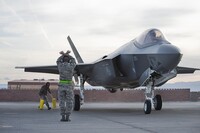 Il caso del generale Grynkewic, Comandante Supremo della NATO in Europa
Se i generali frenano la psicosi bellica dei politici
Il ministro della Difesa tedesco, il socialdemocratico Pistorius, ha ipotizzato davanti al parlamento un attacco russo all’Europa entro il 2029. Per Macron occorre essere pronti anche a “versare il sangue”. Ma il generale che comanda la NATO europea smentisce tutti con i dati dell’intelligence.17 July 2026 - Redazione PeaceLink Albert, international pacifist bulletin
Gaza, July 2026: the crisis continues amid bombings, hunger, and impunity
As of 17 July 2026, the most reliable quantitative data indicates that the overall Palestinian death toll in the Gaza Strip exceeds 73,000 dead and 173,000 injured since the start of the war on 7 October 2023. In July, the list of journalists killed in Gaza has grown longer.17 July 2026 - PeaceLink staff


sociale.network