Even the Swiss have been duped
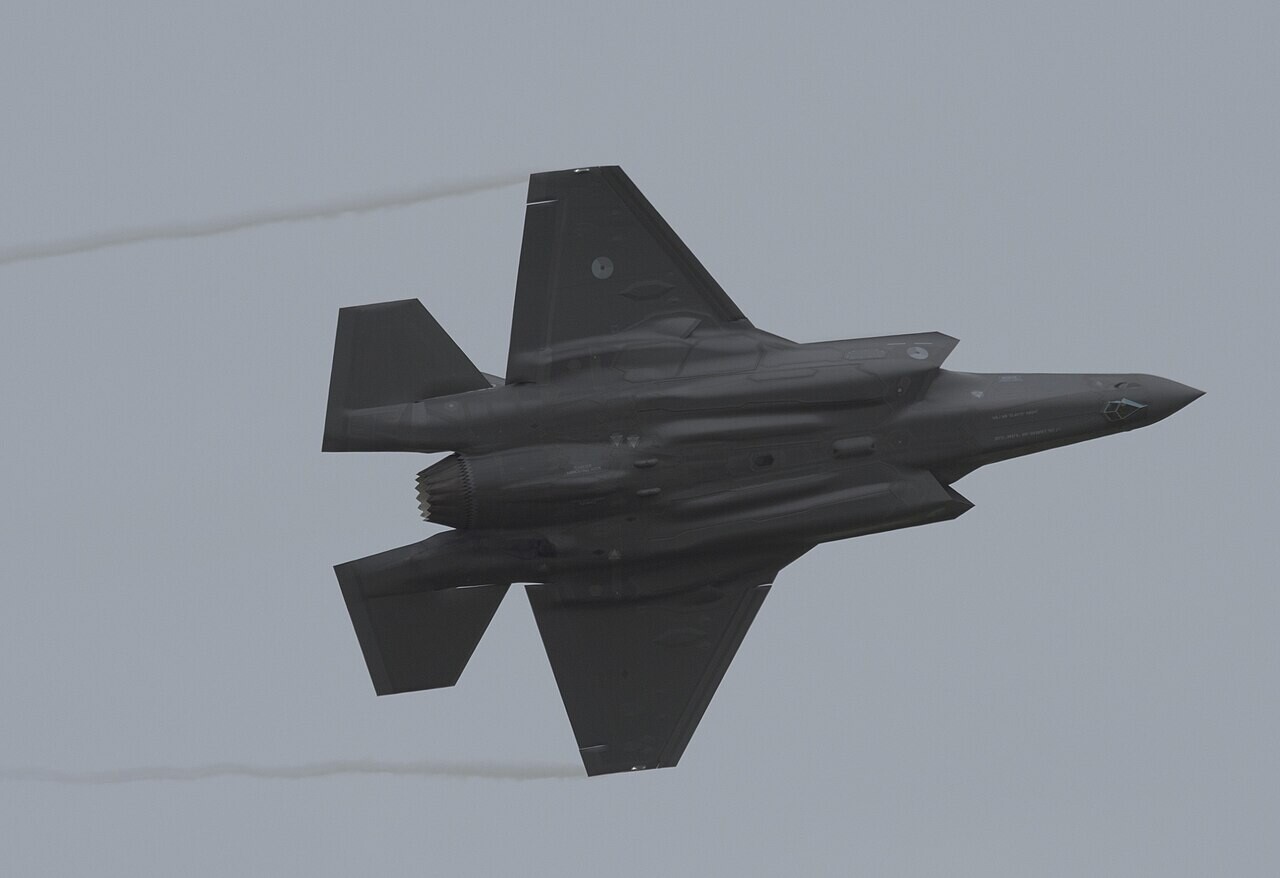
In 2020, the Swiss people voted 50.1% in favour of a referendum to purchase 36 combat aircraft for a maximum total of 6 billion francs. The supporters were unaware that they would be duped. And today those Swiss are bitterly regretting it.
Why?
Because the F-35 was chosen at a "fixed price" but costs have skyrocketed.
The hidden costs of the F-35
In fact - it is good to know - buying an F-35 is not like purchasing a Panda. Even in Italy, parliamentarians discovered that there is an initial purchase cost and then an expense for upgrading avionics and other significant costs to maintain air superiority over time. But perhaps the Swiss politicians did not know this, nor did the unsuspecting citizens who voted 50.1% for the purchase of "invisible" aircraft. So invisible that they risk not being seen in the skies of Switzerland in the future due to the exorbitant costs.
- hardware upgrade: replacement of obsolete physical components, such as old processors, wiring or radar, with next-generation versions;
- software integration: installation of updated software blocks (such as the transition from Block 3F to Block 4) that require structural changes to function;
- defect resolution: corrective structural interventions to address early wear issues or vulnerabilities that emerged during post-production flight testing.
The "fixed price" for the 36 F-35A fighters destined for Switzerland has collapsed. The United States has clarified that there is no binding agreement in this regard, causing cost estimates for the entire lot to soar by over 1 billion francs compared to the 6 billion initially approved by the people in the referendum.
And so to date, Switzerland has not yet received a single F-35.
The first are expected in 2027. Yet, even before an F-35 has flown in Swiss skies, the order has already been reduced: from 36 to 30 aircraft. The same budget is no longer sufficient. The government has already requested an additional 394 million.
The largest military expenditure in Swiss history is turning into its most opaque nightmare.
For Italy, it has been even worse: F-35s that were supposed to cost 80 million euros each have been paid, turnkey, 280 million euros per aircraft. That is over three times the initial "list price". We had already discussed this on PeaceLink.
No aircraft have been delivered: 6 have already been lost
Everyone would have thought that if Italy has been duped... the Swiss would not fall for it. And yet the story is repeating itself. Of the 36 F-35 fighters, 6 will not arrive in Switzerland.
Let’s clarify a point that often generates confusion.
When we say that of the 36 aircraft, 30 remain, we do not mean that 6 have been delivered and then broken, nor that they have been lost in an accident. Simply put, the Swiss government, to remedy the situation, decided to reduce the order even before production began.
Let’s reconstruct the sequence:
- 2020 – The people vote YES in a referendum for 36 aircraft.
- 2022-2023 – The actual costs turn out to be higher than expected (inflation, exchange rate, mandatory software updates).
- 2024 – The government discovers that with 6 billion it cannot buy 36 aircraft.
- Decision: instead of asking for more money from the Swiss (with the risk of a new referendum and a political defeat), Bern reduces the order to 30 aircraft.
- At that point, the government still requests an additional credit of 394 million just to cover inflation.
Result: Switzerland will pay more (6.4 billion and rising) to receive fewer aircraft (30 instead of 36) than promised in 2020. And all this without a new vote being requested from the people, who were misled by a referendum that set a cap on purchase costs.
79 secret criteria: how to vote in the dark
This is the political heart of the Swiss scandal. Let’s see step by step.
What are these 79 criteria?
When a country has to choose a fighter, it does not rely on feelings. It draws up a list of technical and operational requirements: speed, range, short take-off capability, compatibility with existing radars, maintenance costs, and so on. In the Swiss case, these criteria were 79. And they were kept secret – from Parliament, journalists, and citizens.
Why were they kept secret?
The official motivation from the government was national security. Revealing the criteria, according to Bern, would have allowed potential military enemies to understand the weaknesses of Swiss defence. An explanation that held for years.
What did the Federal Administrative Court discover?
After an appeal from a journalist at RSI (the Swiss TV of the Italian canton) who had conducted the report, the Federal Administrative Court examined the case. The ruling was clear: the government must publish the 79 criteria. Why? Because, the judges wrote, there is no risk to national security in knowing the parameters by which a tender was evaluated. The criteria do not contain operational military secrets. They simply contain the list of what the government was asking of the manufacturers.
Why was secrecy advantageous for the F-35?
This is the key question. Once the criteria were made public (after the ruling), many independent observers made an embarrassing discovery: the 79 criteria had been written in such a way that only the F-35 could meet them all. Requirements such as the ability to penetrate enemy territory without being detected (stealth), or integration into a strictly American combat network, were irrelevant to the defence of Swiss airspace. But they were perfect for excluding European competitors (Eurofighter, Rafale, Gripen).
In other words: the Swiss government kept the criteria secret because otherwise it would have been clear that the tender seemed tailor-made for the F-35.
What does all this mean in monetary terms?
| Before the ruling | After the ruling |
|---|---|
| Swiss citizens voted without knowing on what technical bases the F-35 had been chosen. | The criteria are public. And confirm that the tender seemed tailor-made for the F-35. |
| The government could say "it was an objective technical choice". | It can no longer say that: the criteria were tailored for the F-35. |
| The Swiss Parliament approved this enormous military expenditure in the dark. | Now parliamentarians are demanding accountability. |
And national security?
The Court also dismantled this thesis. The criteria – it wrote – describe general performance of an aircraft (e.g.: "must be able to operate in environments with advanced air defences"). They do not reveal either the layout of Swiss radars, nor communication codes, nor military frequencies. Keeping them secret was a political choice, not a military necessity.
The report that shook the Swiss government
The credit for the turning point goes to the report by RSI, the television of Italian-speaking Switzerland.
The investigations reconstructed secret meetings and economic interests. And also a systematic opacity from the Department of Defence. It was a journalist from RSI who appealed to the Court, obtaining the ruling that forced the government to publish the 79 criteria.
There have been repercussions within the federal arms administration as it was discovered that some officials had raised doubts but had been marginalised. No one has ever openly spoken of "corruption". But many have used the same word: intransparence, Intransparenz, opacity.
The paradox of neutral Switzerland
A few observations on the strictly military aspect of the choice. Switzerland has chosen a stealth fighter – designed for deep attack missions – to patrol its alpine sky. A bit like buying a Formula 1 car to get around town. And it did so based on secret criteria that excluded any European alternative from the outset.
But the most relevant fact is the total dependence that Switzerland, a neutral country, would end up having on US technologies of the F-35.
In fact, the F-35 is a system fully integrated into the political, industrial, and military system of the United States. Maintenance, software updates, logistics, even the authorisation for take-off in certain configurations depend on Washington. With Donald Trump back in the White House, the fear of political blackmail is no longer science fiction. A popular petition has called it "the last straw".
Meanwhile, the purchase of the American Patriot air defence system has also faced delays of 4-5 years and price increases. Switzerland has begun to look with renewed interest at the Franco-Italian SAMP/T system.
Is it still possible to stop the F-35s?
Formally, yes. A popular initiative has already been launched to block the purchase. But the collection of signatures, the voting, and the eventual implementation would take at least two or three years. By that point, a good part of the 30 aircraft would have already been paid for and partially delivered (the first flights are expected in 2027).
Canceling the contract now would cost about 1.5 billion Swiss francs in penalties and costs already incurred. An enormous figure, but still lower than the 6 billion Swiss francs (over 6.5 billion euros) expected. This is the dilemma that divides the Swiss Parliament.
What remains of the 'Swiss model'
Switzerland has always portrayed itself as the country of transparent democracy and undisputed competence. The F-35 affair is tarnishing that image.
It is not just a story of out-of-control costs. It is the story of how a neutral country has delegated its defence to an opaque contract that its citizens have never been able to read in full. It is the story of 79 criteria kept secret not for military reasons, but to make any democratic oversight impossible. And it is the story of how 36 promised aircraft have turned into 30, all without the first F-35 ever having arrived in Switzerland.
Articoli correlati
 Albert, international pacifist bulletin
Ukraine: the uprising of the squares against the military "meat grinder"
The sacking of popular Defence Minister Fedorov has sparked unprecedented protests in Kyiv and other Ukrainian cities. At the heart of the anger from protesters and the families of soldiers is the strategy of Commander-in-Chief Syrskyi, accused of sacrificing too many human lives.18 July 2026 - Redazione PeaceLink- Albert, bollettino pacifista internazionale
Ucraina: la rivolta delle piazze contro il "tritacarne" militare
Il siluramento del popolare ministro della Difesa Fedorov accende proteste senza precedenti a Kiev e in altre città ucraine. Al centro della rabbia dei manifestanti e dei familiari dei soldati c'è la strategia del Comandante in Capo Syrskyi, accusato di sacrificare troppe vite umane.18 July 2026 - Redazione PeaceLink  Il caso del generale Grynkewic, Comandante Supremo della NATO in Europa
Se i generali frenano la psicosi bellica dei politici
Il ministro della Difesa tedesco, il socialdemocratico Pistorius, ha ipotizzato davanti al parlamento un attacco russo all’Europa entro il 2029. Per Macron occorre essere pronti anche a “versare il sangue”. Ma il generale che comanda la NATO europea smentisce tutti con i dati dell’intelligence.17 July 2026 - Redazione PeaceLink Albert, international pacifist bulletin
Gaza, July 2026: the crisis continues amid bombings, hunger, and impunity
As of 17 July 2026, the most reliable quantitative data indicates that the overall Palestinian death toll in the Gaza Strip exceeds 73,000 dead and 173,000 injured since the start of the war on 7 October 2023. In July, the list of journalists killed in Gaza has grown longer.17 July 2026 - PeaceLink staff


sociale.network