Blood gold
There is a direct line connecting the massacres of the war in Sudan to the major global financial hubs and, ultimately, to our jewellery shops. It is the international system of gold smuggling, one of the main resources available to the actors of the Sudanese armed conflict to finance their war machine, which has caused a humanitarian crisis with tens of thousands of deaths and over 12 million people fleeing in more than three years. The tools to impact this chain of death exist, even if the gold trade is articulated along opaque and difficult-to-monitor value chains and through distribution nodes that appear untouchable.
The meeting in Rome
Dozens of Italian civil society organisations gathered this week to develop possible lines of intervention to promote transparency and combat gold trafficking and its use to finance the war. The invitation came from the Comboni missionaries, who also hosted the meeting at their Roman headquarters on via Lilio. The initiative was divided into two parts: first, technical contributions from some of the world's leading experts on gold trade and smuggling and on the regulation of conflict minerals. Then, a discussion on possible lines to follow based on this wealth of data and information. The workshop is a new step in a journey that began over 18 months ago, marked by appeals to institutions, sit-ins, press conferences in Parliament, and moments of public awareness. What you will read are reworkings of what emerged from the initiative in Rome, of which Nigrizia has provided a comprehensive account.
The situation is critical in Kordofan
A cry that has often gone unheard while the fear of new mass killings becomes increasingly real in North and South Kordofan, where the Rapid Support Forces (RSF) continue their sieges and seem to be preparing for an attack on the city of El Obeid, the capital of the northern province of the region. The great fear is to see the indiscriminate violence that marked the entry of the RSF into El-Fasher in 2025 or the conquest of Geneina in 2024, respectively the capitals of North and West Darfur. But extreme violence has marked the entire conflict and has seen among the perpetrators also the Sudanese Armed Forces (SAF) who are fighting against the RSF.
As calls to not look away from Kordofan multiply, leaks from the British newspaper Guardian point the spotlight on the UK government, which rather than upset the United Arab Emirates has refrained from intervening on the massacres in Darfur and has kept quiet about the information it possesses regarding Ethiopia's role in the conflict, an ally of Abu Dhabi. London is also the government responsible for Sudanese issues at the United Nations Security Council, the so-called penholder. An additional indication, just the latest in a series, towards the need to broaden the perspective and also look at international responsibilities and global networks that contribute to perpetuating this conflict, such as the smuggling of gold which sees a fundamental hub in the Emirates.
Understanding conflict gold
The basic coordinates on the trafficking of the precious mineral from Sudan were provided by Marc Ummel and Sasha Lezhnev. The former is a researcher for the Swiss NGO Swissaid, specialised in monitoring the international gold trade, particularly from Africa. The latter is a senior advisor for the advocacy organisation The Sentry, which has always been at the forefront of studying and combating conflict minerals.
The data is clear: by analysing the official figures on exports from Khartoum and the official import figures in partner countries, it is inferred that between 50 and 70% of Sudanese gold is smuggled every year. We are talking about a significant portion of a total of 70 tonnes annually, whose overall value is estimated to be between 9 and 12 billion dollars. Gold represents about 70% of total Sudanese exports. In the country's economy, it has taken on the centrality that oil once had, a resource that has diminished by about 75% of total reserves since the split with South Sudan in 2011.
Gold is extracted and smuggled by both main factions involved in the conflict, although it is not easy to determine how much is produced by the RSF and how much by the SAF. Since 2023, the official data from the Sudanese Mineral Resource Company (SMRC) does not include figures related to gold extracted in areas controlled by the RSF. According to some estimates, however, the share belonging to the militia is lower than that exported by the army, contrary to what is often claimed in public debate.
One of the most complex aspects of the Sudanese gold industry is that 90% of production is carried out by small artisanal or traditional miners, whose activities are much more complex to monitor. What is certain is that both the RSF and SAF smuggle gold out of the country: the former through Chad, Libya, South Sudan and from the latter to Kenya and Uganda. The latter mainly through Egypt and to a lesser extent through Eritrea.
Anatomy of a fundamental hub
The final destination is, however, a single one: the United Arab Emirates. This is despite the fact that last year the authorities in Port Sudan, and therefore the SAF, blocked flights to the country. Abu Dhabi is therefore no longer the primary destination for regular gold trade, which has shifted to Egypt and Qatar, while the vast majority of gold production still ends up in the Emirates through illegal flows passing through neighbouring countries.
What happens in the small country of the Arabian Peninsula deserves further investigation: Ummel explained how the United Arab Emirates are the second largest importer of gold in the world after Switzerland, with about 1,400 tonnes annually worth 105 billion dollars. More than half of this gold comes from Africa. The country is also a massive international hub, with up to 50 refineries among large and small plants and thousands of trading companies active in free trade zones such as the Dubai Multi Commodities Centre (DMCC).
Lezhnev highlighted how up to 10,000 small vendors operate in the country's traditional markets, buying everything in cash and then selling to large refineries without any possibility of monitoring. Customs checks often prove to be fictitious, audits are carried out in a lax manner. The result is that in just 2022, the Emirates imported more than 405 tonnes of illegal gold from the African continent.
Reforms vanished into thin air
Emirati regulations have become stricter after the UAE were placed on the grey list of countries under observation for money laundering by the Financial Action Task Force (FATF) in 2022. To exit it, the following year the Emirates introduced new regulations on due diligence for responsible gold sourcing. Ummel and Lezhnev agree that the law is excellent on paper but that its implementation has been nothing short of patchy. Not a gram of illegal gold has been effectively blocked at the borders by Emirati authorities. Last but not least, the Emirates were finally removed from the FATF grey list last year.
According to Lezhnev from The Sentry, the United Arab Emirates can benefit from very powerful international allies such as the United States and Israel and can easily shield themselves from sanctions and more stringent monitoring mechanisms.
The role of Switzerland
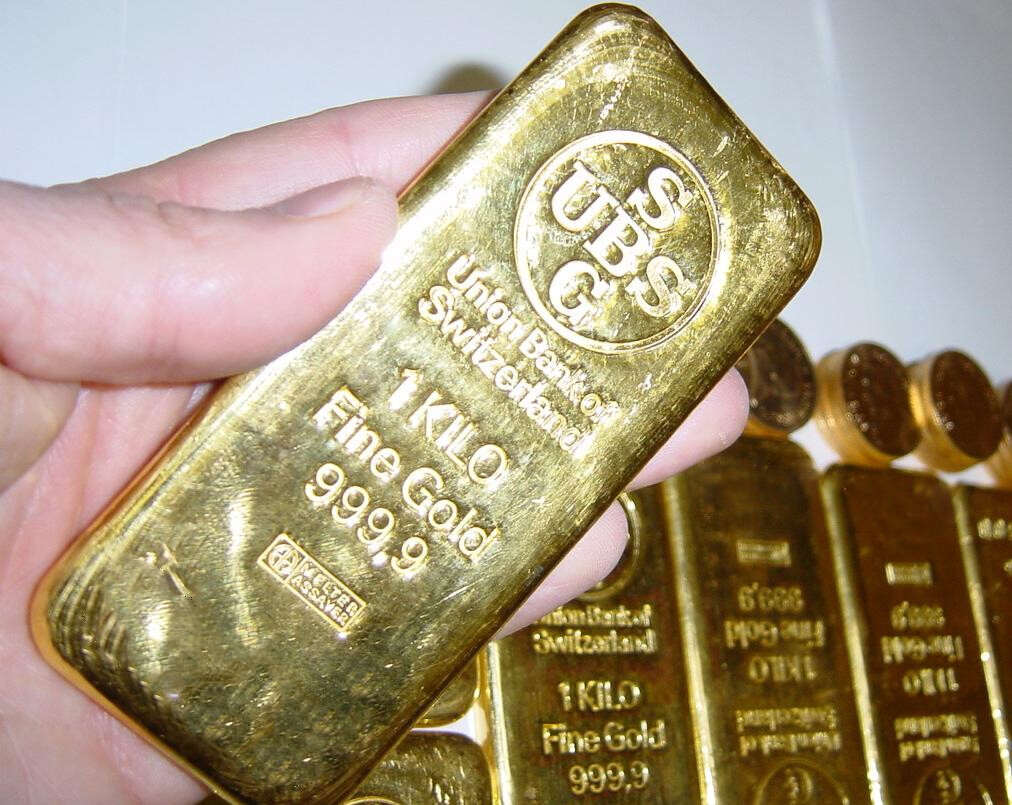
However, the problems do not stop at the borders of the Emirates. Only in 2025, 420 tonnes from the country ended up in Switzerland, a further increase from the 150 tonnes in 2024, making Bern the primary destination for gold re-exported from Dubai. The gold arrives in the Swiss confederation already refined, a factor that further complicates the possibility of verifying its origin.
The path from the massacres in Sudan to our homes is starting to become clearer: gold leaves the country, passes through Egypt, Libya or Chad, and finally arrives in the United Arab Emirates, exploiting the numerous gaps in monitoring the supply chain. In the Arabian Peninsula, it is refined. From there, no longer traceable to its origins, it enters Switzerland and from there to European markets, as will soon be seen.
Although four of the five major Swiss refineries refuse to import from the United Arab Emirates due to the lack of transparency in the supply chain, the fifth refinery, Valcambi, imports almost all of this gold. But it claims that its gold is "clean". And rejects the criticisms. After years of pressure from civil society, Valcambi has been forced to make its Emirati suppliers public. In light of what the Swiss company has communicated, the risks of triangulation with gold smuggled from Sudan are evident, although very difficult to verify with absolute certainty. Valcambi sources from at least one refinery that buys in Egypt and another that purchases directly from Sudan.
Prompted by civil society, Valcambi has admitted to importing large quantities of gold from the Emirates, but specifies that it works only with two refineries, requires certificates of origin, and excludes countries under sanctions. However, this is not enough, given the opacity that characterises the Emirati system. Confirmation comes from the authorities in Bern, to whom Swissaid has asked whether gold from Sudan arrives in Switzerland through the United Arab Emirates. The Swiss government has responded that it cannot guarantee the origin of the metal imported from the country with certainty.
What happens in the EU
Understanding how the Emirati and Swiss markets operate is crucial to having a clear idea of how gold smuggling works. After all, almost 65% of all metal imported into the European Union comes from Switzerland. This metal already travels with the most authoritative certifications in the sector, those provided by the London Bullion Market Association (LBMA) and the Responsible Jewellery Council (RJC), the standard used by the luxury watch and jewellery industry.
This happens because the major Swiss refineries, including Valcambi, are LBMA certified. In theory, therefore, this gold should not pose any problems, while identifying its origin is practically impossible. The EU regulation on Conflict Minerals also presents a series of structural limits. The checks provided for by this regulation, introduced for the first time in 2017, stop at the first-level supplier. This means that if a control authority in Italy or Germany wanted to verify where the gold purchased from its importer comes from, it would only discover that it arrived from Switzerland, without being able to trace the entire supply chain backwards.
There is then an additional level of ambiguity. The European Commission has determined that the LBMA standard does not meet the general recognition conditions, stating that neither the policies, nor the standards, nor their practical implementation are fully aligned with the criteria of the Organisation for Economic Co-operation and Development (OECD), which are currently considered the most authoritative and reliable. According to Ummel from Swissaid, we are faced with an evident paradox: on the one hand, the Commission acknowledges that the LBMA standard is full of flaws and refuses to certify it; on the other hand, the same European countries continue to source Swiss gold protected by that same certification.
In practice, the possibility of ensuring that the gold arriving in Europe is not “conflict gold” is increasingly distant.
During the Roman meeting, a discussion on the EU regulation was deepened by Erik Burckhardt, Global Policy Adviser of the United Nations Development Programme (UNDP), with extensive experience in European institutions. The expert explained how European regulations are set to undergo a review in 2024. Awareness of a series of shortcomings was present, but there was confidence that many of the problems could be indirectly resolved by another regulation that was being worked on at that time, related to due diligence for large companies. The problem is that the ever-increasing geopolitical competition recorded in recent years has ended up steering the regulation towards competitiveness, leaving many of the transparency issues effectively unchanged. The beneficial effect on the issue of conflict minerals, in the end, has not materialised.
The difficulty in addressing the issue at EU institutions has also been highlighted in a video link by the MEP Marco Tarquinio (PD), who urged civil society to continue pressing European political representatives on these issues and promised to continue his commitment to raising awareness about the war in Sudan. Tarquinio also noted a slow but decisive change in sensitivity in Brussels, where there is increasingly recognition of the decisive role played in the conflict by external actors, above all the Emirates.
Focus Italy
Italy imported gold directly from Sudan until 2022, then stopped in 2023 due to the outbreak of war. In 2025, Italy imported as much as 178 tonnes of gold, a significant share. For the first time, most of this metal came from the United States, not from Switzerland, which was the second country of arrival for the metal. About 30 tonnes came directly from the United Arab Emirates.
What should be done
Ummel and Lezhnev, the two experts who provided the overview on gold, also suggested some possible practical actions, both for states and for civil society. As highlighted by Burckhardt, in the coming months the EU Commission will submit the regulation on critical minerals to a second review after that of 2024. Public consultations will also be opened, and this moment represents a great opportunity for civil society movements to make an impact.
Lezhnev pointed out The Sentry's campaign to denounce the policies of massive investments in sports with which the Emirates attempt to clean up their international image, urging to insist on this front.
Civil society organisations have renewed their commitment to the review of the EU regulation and emphasised the need to continue on the front of public awareness, but also on dialogue with the government. Paradoxically, despite two years of denunciations from civil society, at the beginning of June the military cooperation treaty between Italy and the United Arab Emirates was definitively ratified.
Below are the organisations that participated in the meeting convened by the Comboni missionaries: Representatives of the Sudanese diaspora in Italy; Peace and Disarmament Network; Focolare Movement; Emergency; Doctors Without Borders; Sant'Egidio; Pax Christi; FOCSIV; CIPAX; ACLI; Caritas Italiana; Nonviolent Movement.
The political and moral responsibility
The initiative in Rome highlighted an uncomfortable truth: the genocide in Sudan is fuelled by a global chain of complicity and indifference. The United Arab Emirates, with their role as a hub for smuggled gold, are not mere spectators, but key actors enabling the financing of war. Their reforms on paper, never implemented, and their ability to evade international scrutiny, thanks to powerful allies, render them morally and politically responsible.
MEP Cecilia Strada stated: "Last year I opposed the decision of the European Commission to remove the United Arab Emirates from the list of high-risk money laundering countries, and I did so because they are the main recipient of illegally extracted gold from Sudan".
The Italian civil society, with this initiative, has chosen not to look away. It has called on European and national institutions to act, to make supply chains transparent, to sanction those responsible. As MEP Tarquinio recalled, sensitivity is changing, but it is not enough. It is necessary for politics to finally listen to the cry coming from Sudan and to initiate concrete actions. For Ukraine, it does, why does it not do the same for Sudan?
Articoli correlati
 Albert, international pacifist bulletin
Ukraine: the uprising of the squares against the military "meat grinder"
The sacking of popular Defence Minister Fedorov has sparked unprecedented protests in Kyiv and other Ukrainian cities. At the heart of the anger from protesters and the families of soldiers is the strategy of Commander-in-Chief Syrskyi, accused of sacrificing too many human lives.18 July 2026 - Redazione PeaceLink- Albert, bollettino pacifista internazionale
Ucraina: la rivolta delle piazze contro il "tritacarne" militare
Il siluramento del popolare ministro della Difesa Fedorov accende proteste senza precedenti a Kiev e in altre città ucraine. Al centro della rabbia dei manifestanti e dei familiari dei soldati c'è la strategia del Comandante in Capo Syrskyi, accusato di sacrificare troppe vite umane.18 July 2026 - Redazione PeaceLink  Il caso del generale Grynkewic, Comandante Supremo della NATO in Europa
Se i generali frenano la psicosi bellica dei politici
Il ministro della Difesa tedesco, il socialdemocratico Pistorius, ha ipotizzato davanti al parlamento un attacco russo all’Europa entro il 2029. Per Macron occorre essere pronti anche a “versare il sangue”. Ma il generale che comanda la NATO europea smentisce tutti con i dati dell’intelligence.17 July 2026 - Redazione PeaceLink Albert, international pacifist bulletin
Gaza, July 2026: the crisis continues amid bombings, hunger, and impunity
As of 17 July 2026, the most reliable quantitative data indicates that the overall Palestinian death toll in the Gaza Strip exceeds 73,000 dead and 173,000 injured since the start of the war on 7 October 2023. In July, the list of journalists killed in Gaza has grown longer.17 July 2026 - PeaceLink staff


sociale.network